Call or Text
801-438-4793Back to Blog
Hard Water in Salt Lake City: How to Fix Water Hardness at Home
November 17, 2026
You wash the glasses, and the spots come right back. The showerhead needs another scrub, and even a freshly cleaned faucet has a chalky ring around it. If this sounds familiar, your tap water may be carrying more calcium and magnesium than your household needs.
The most reliable way to fix water hardness is to test your water first, then choose a treatment that matches the results. A whole-home ion-exchange softener removes hardness minerals; a salt-free conditioner aims to reduce scale formation without removing them; and reverse osmosis treats water at a specific tap. Cleaning away deposits helps, but it won’t change the water coming into your home.
At Superior Water & Air, we help Salt Lake City homeowners sort out those differences before they invest in equipment. Here’s how to determine water hardness, understand your options, and stop treating the same mineral stains over and over.
Key Takeaways
- Test untreated tap water first. A hardness reading helps you choose treatment based on your home’s actual conditions.
- Hard water is common in the Salt Lake Valley, but hardness levels vary by water source and household.
- Ion-exchange softeners remove calcium and magnesium for whole-home hardness reduction.
- Salt-free conditioners target scale formation, while reverse osmosis treats drinking and cooking water at a specific tap.
- Cleaning removes existing mineral deposits, but lasting relief depends on treating incoming water and maintaining your system.
Why Hard Water Is Common in Salt Lake City Homes

Water hardness refers to dissolved calcium and magnesium ions picked up as water moves through rock and soil.
The Salt Lake Valley’s mineral-rich geology makes hard water a familiar concern, although the exact level depends on your water source and location. Your neighbor’s reading may not match yours.
Salt Lake City’s 2026 water quality report illustrates the difference: total hardness was 136 mg/L at Big Cottonwood, 212 mg/L at City Creek, and 154–571 mg/L across sampled wells and springs. Those are source readings, not a substitute for testing your tap.
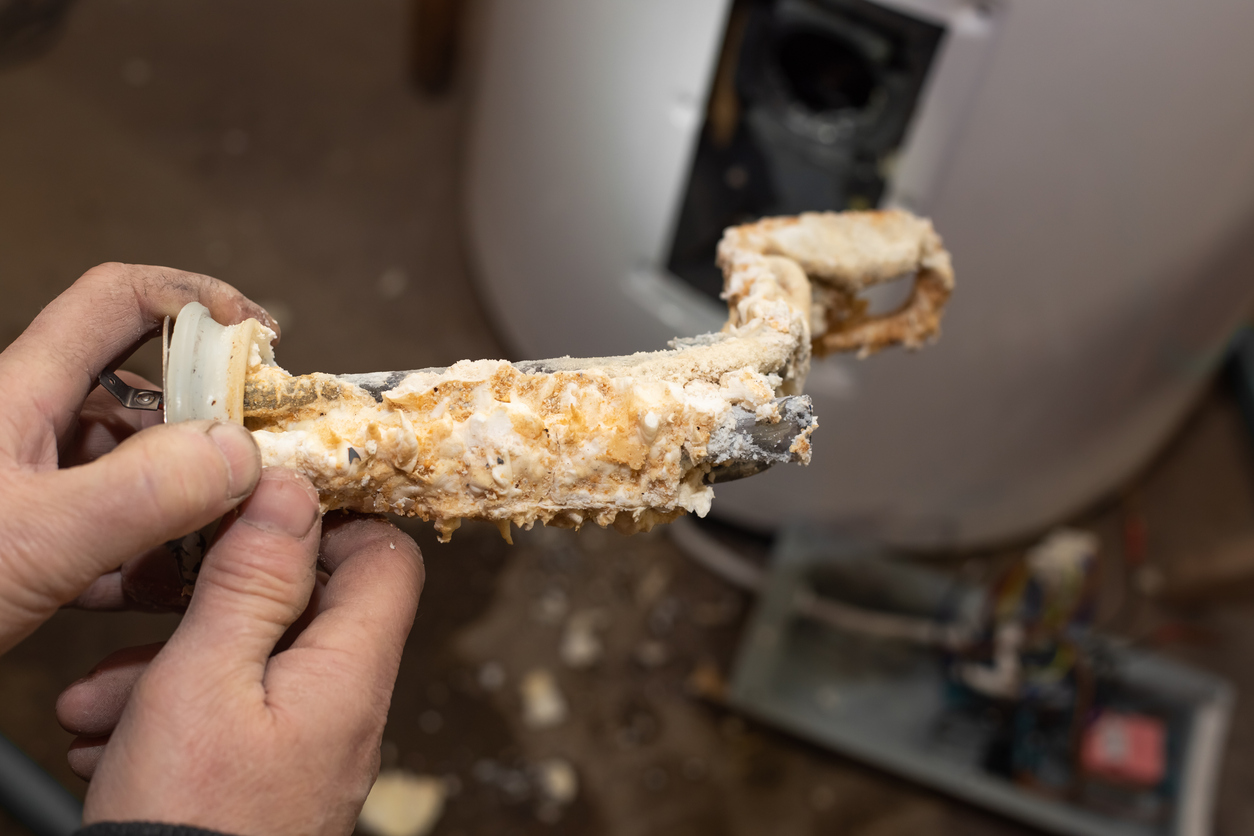
Hard water is generally a household maintenance problem rather than a drinking-water safety issue. As water evaporates, calcium carbonate and other mineral deposits can remain on fixtures. Heated surfaces, including a hot water heater, are especially prone to scale. A Pacific Northwest National Laboratory study found that hardness-related scale can affect some water heaters, although the impact depends on heater type and operating conditions.
White deposits on faucets, spots on glassware, soap scum, and weak shampoo lather are common warning signs. But those clues can’t tell you how hard your water is. A simple test can, and that number is what helps you choose the right treatment.
How to Determine Your Home’s Water
Hardness
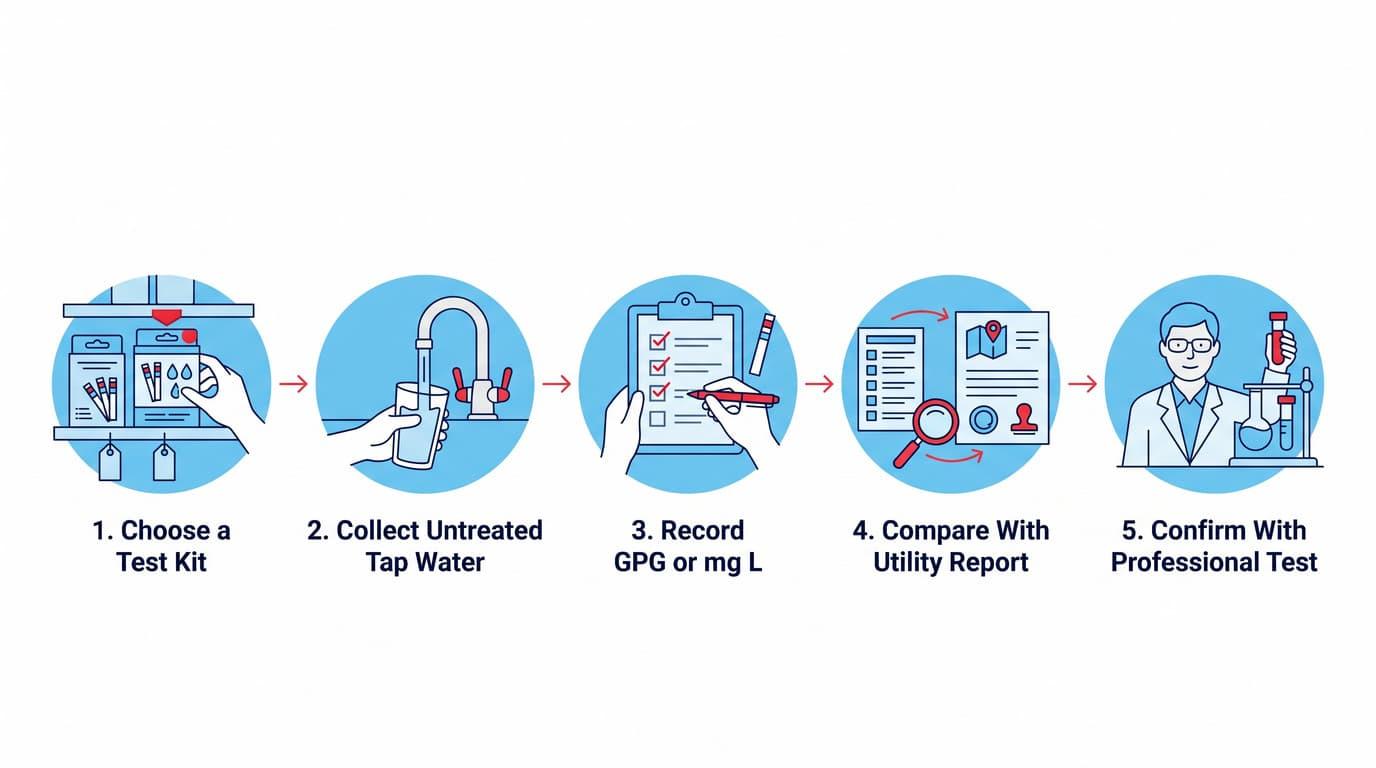
Testing takes only a few minutes with a home kit. For a useful result, follow this sequence:
- Choose a hardness test strip or test strips for a quick range, or a drop-count test kit for a more precise number when comparing equipment.
- Collect untreated cold tap water, ideally from a tap before any existing softener or filter.
- Follow the kit manufacturer’s instructions, then record your result in GPG or mg/L (PPM).
- Compare your reading with your water utility’s published water-quality report for local context. Source readings may differ from the water at your tap.
- If you’re comparing treatment systems, ask for a professional hardness test to confirm the result and account for household water use.
Keep your result handy as you review the hardness ranges below.
Understanding Water Hardness Levels: GPG vs. PPM
Hardness is commonly reported as grains per gallon (GPG) or milligrams per liter (mg/L), approximately equal to parts per million (PPM) when expressed as calcium carbonate. One GPG equals about 17.1 mg/L. The U.S. Geological Survey classifies hardness as follows:
| Water hardness | mg/L (PPM) | GPG (approx.) |
| Soft | 0–60 | 0–3.5 |
| Moderately hard | 61–120 | 3.6–7.0 |
| Hard | 121–180 | 7.1–10.5 |
| Very hard | Over 180 | Over 10.5 |
These USGS hardness classifications provide a useful starting point, but a higher reading doesn’t automatically mean you need the biggest system. Your household’s water use, existing equipment, and the problems you’re trying to solve also influence the right treatment.
How to Fix Water Hardness With the Right Treatment
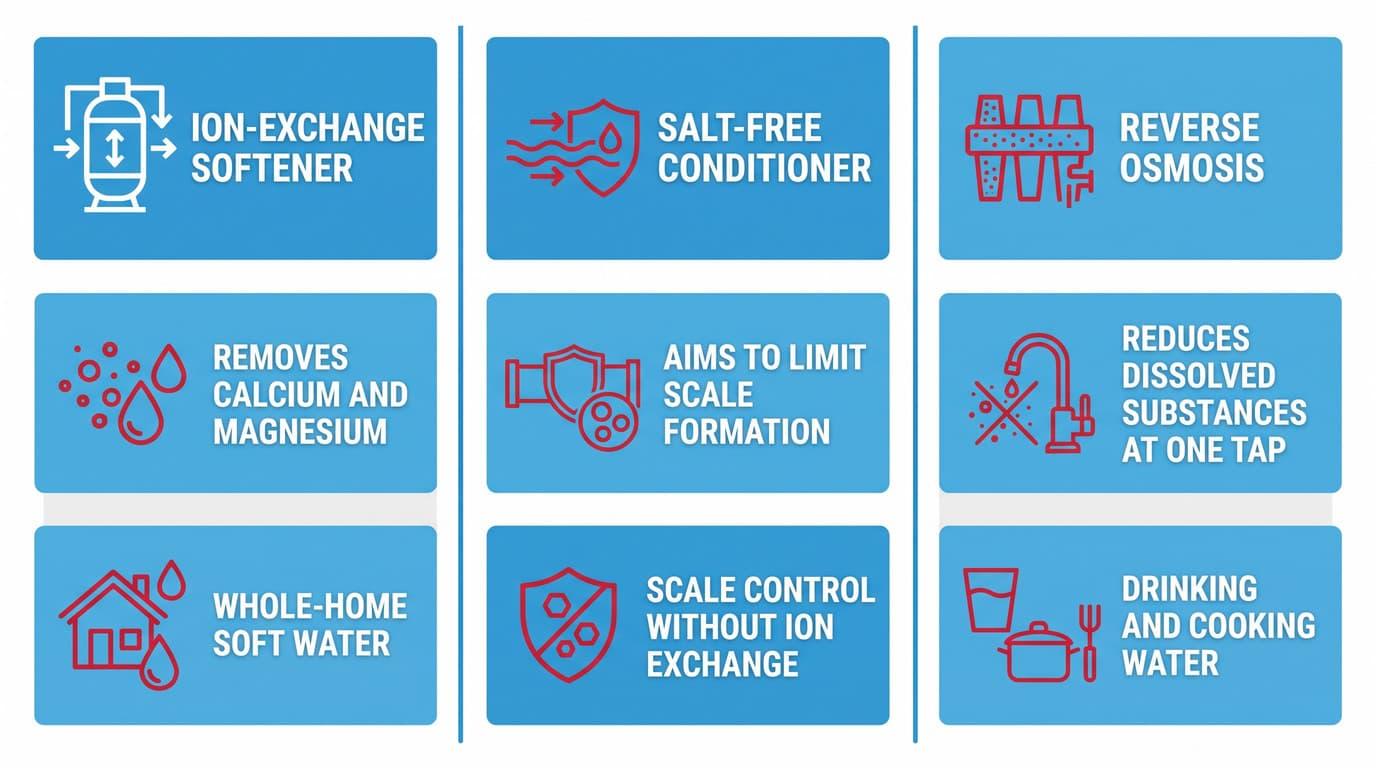
Once you know your hardness level, the next question is what you want to change. Do you need softer water at every tap, fewer scale deposits, or better water for drinking and cooking? Each goal calls for a different approach.
1. Water Softeners for Whole-Home Hardness Removal
For whole-home hardness reduction, a conventional water softener is the most direct solution. Water passes through resin that captures calcium and magnesium ions and exchanges them for sodium ions or, in some configurations, potassium ions. The system periodically regenerates with a salt solution, flushing away the collected minerals.
By removing hardness minerals, this method can lower measured GPG at household taps and reduce scale in plumbing, dishwashers, and water-heating equipment. The right capacity depends on your tested hardness and daily water use, not just the number of bathrooms.
2. Salt-Free Conditioners for Scale Control
A salt-free conditioner changes how some hardness minerals form deposits. It generally does not remove calcium and magnesium, so a hardness test may show essentially the same result afterward. Performance varies by technology and water chemistry. That distinction matters when comparing traditional and salt-free systems: one softens the water, while the other primarily targets scale formation.
3. Reverse Osmosis for Drinking and Cooking Water
A reverse osmosis (RO) system uses a membrane to reduce many dissolved substances, including hardness minerals, at a specific point of use. It can improve drinking and cooking water, but an under-sink RO unit does not protect a shower, dishwasher, or hot water heater from incoming hard water. RO water may also taste different because it contains fewer dissolved minerals. Distillation also separates pure water from dissolved minerals through boiling, but it is a different process from reverse osmosis. That’s why water softeners and purifiers solve different household problems.
| Method | What it changes | Most useful when |
|---|---|---|
| Ion-exchange softener | Removes calcium and magnesium | Whole-home soft water |
| Salt-free conditioner | Aims to limit scale formation | Scale control without ion exchange |
| Reverse osmosis | Reduces dissolved substances at one tap | Drinking and cooking water |
Not every Salt Lake City home needs the same water treatment setup. Superior Water & Air can help you compare a whole-home softener for reducing hardness at every tap, a conditioner for managing scale, or a point-of-use system for drinking water. Our team can use your hardness results and household priorities to help narrow the options.
Explore Whole-Home Water Options
How to Remove Hard Water Stains and Existing Scale
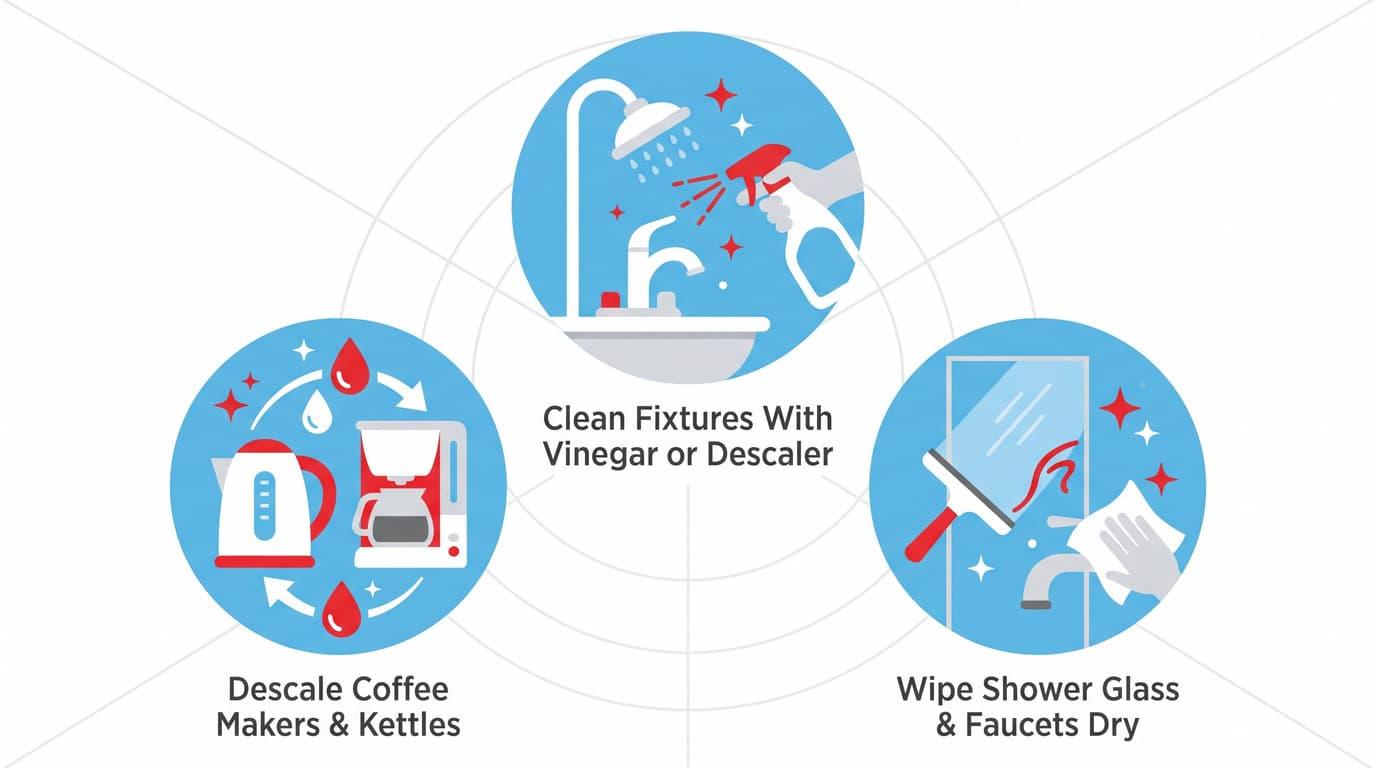
Treating incoming water helps prevent new deposits, but it won’t instantly clear the scale already coating a showerhead or faucet. A little targeted cleaning can make those surfaces easier to maintain while your treatment addresses the source.
- Clean compatible fixtures with diluted white vinegar or a manufacturer-approved descaler. Check surface instructions first, especially for natural stone and delicate finishes.
- Descale coffee makers, kettles, and other appliances according to their manuals. Don’t pour vinegar into equipment unless the manufacturer allows it.
- Wipe shower glass and faucets dry after use to reduce visible deposits as water evaporates.
Cleaning removes the deposits you can see, not the dissolved minerals coming through the tap. If spots return quickly, use your hardness reading to revisit the treatment setup rather than buying another cleaner. For homeowners considering a softener, that leads to a few practical questions about sizing and upkeep.
Choosing and Maintaining a Water Softener in Salt Lake City
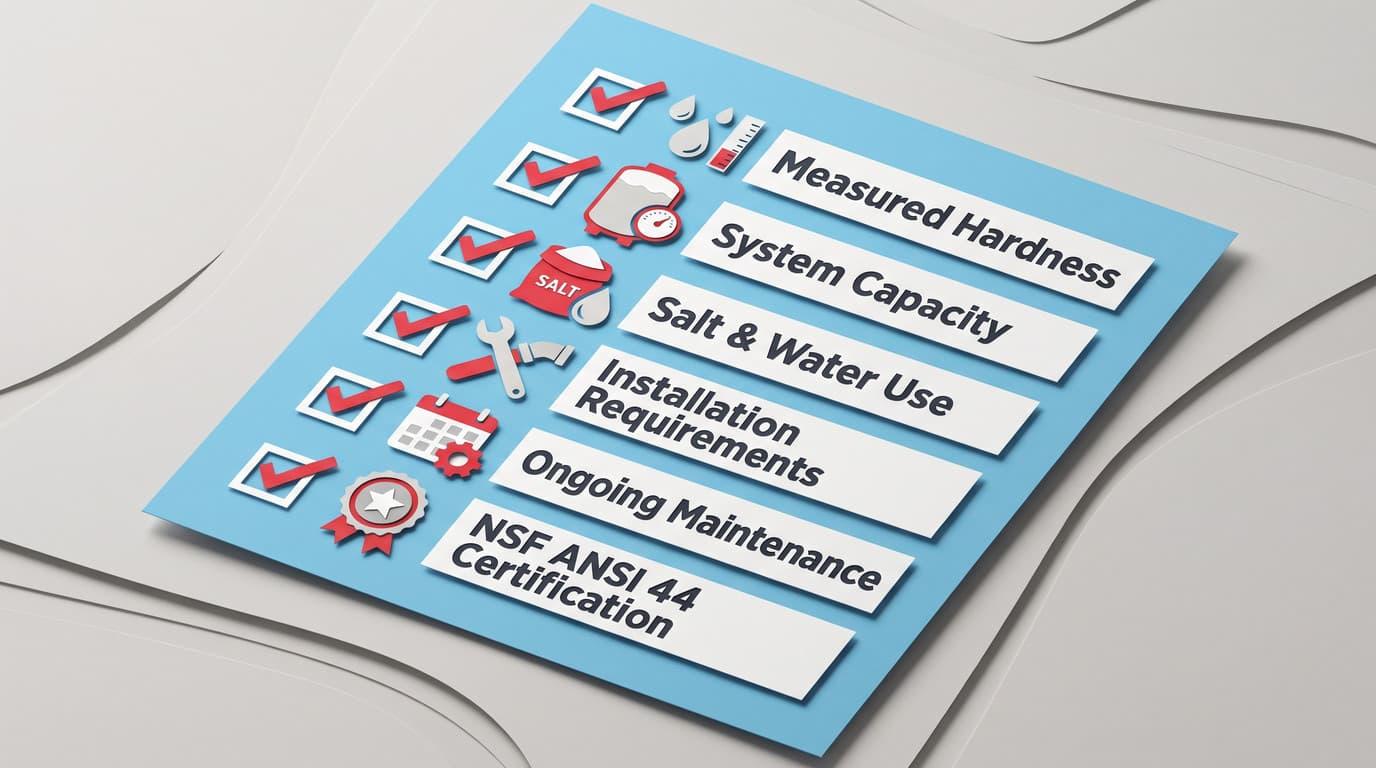
Before choosing a provider for hard water treatment in Salt Lake City, ask for your measured hardness, proposed system capacity, estimated salt and water use, installation requirements, and ongoing maintenance. A metered softener that regenerates based on actual use may fit your household better than a timer-only model.
Ask whether the unit has independent performance certification to NSF/ANSI 44 and what that certification covers. Installation may require space for the resin and brine tanks, an electrical connection, a suitable drain, and a bypass. Where practical, keep outdoor irrigation taps on untreated water so you’re not using softened water on the lawn.
After installation, check the salt level and follow the manufacturer’s maintenance schedule. If hardness returns, inspect for an empty brine tank, salt bridge, bypass setting, or regeneration issue before assuming the system needs replacing. Retest the treated water to confirm performance. Also ask about water heater maintenance: the laboratory report cited earlier recommends inspecting the anode rod in glass-lined steel tanks every one to two years, since corrosion protection matters when water is softened.
Whether you’re choosing your first water softener or troubleshooting an existing unit, Superior Water & Air can help you determine the next step. Our team can review your water hardness, household needs, and system performance to recommend an appropriate installation, repair, or replacement.
Explore Water Softener Installation & Repair
Get Ahead of Hard Water Before Scale Returns
If spots keep appearing on your dishes and scale keeps returning to the shower, cleaning harder isn’t the long-term answer. To fix water hardness, start by testing your tap water, determining whether you need mineral removal or scale control, and choosing a solution that fits your Salt Lake City home.
At Superior Water & Air, we help homeowners turn a confusing hardness reading into a practical plan, whether that means evaluating a new water softener, reviewing treatment options, or troubleshooting a system already in place. We’ll focus on what your household needs, not on adding equipment for its own sake.
Frequently Asked Questions About Water Hardness
These five questions address common concerns that come up once you start comparing water treatment options.
Can boiling water make hard water soft?
Boiling can reduce some temporary, carbonate hardness in a small amount of water, but it does not reliably remove permanent hardness. It isn’t a practical whole-home treatment.
Does a standard pitcher filter remove water hardness?
Not necessarily. Many pitcher filters focus on taste and odor rather than calcium and magnesium. Check the product’s certified claims before relying on it to reduce hardness.
Is hard water the same as high total dissolved solids?
No. Total dissolved solids (TDS) includes many dissolved substances, while water hardness specifically reflects calcium and magnesium. A TDS meter alone cannot tell you the hardness level in GPG.
Will softened water add sodium to my drinking water?
Sodium-based ion exchange adds some sodium as it removes hardness minerals; the amount depends on the starting hardness. If you follow a sodium-restricted diet, discuss your options with your clinician and ask about an unsoftened drinking-water tap. The EPA sodium drinking-water advisory notes that its 20 mg/L guidance level was developed for people limited to 500 mg of sodium daily, not the general population.
Does water hardness affect pH?
Hardness and pH are different water parameters. Calcium and magnesium contribute to general hardness, while alkalinity or carbonate hardness reflects water’s ability to buffer against pH changes. Do not choose a hardness treatment solely to adjust pH. water pH and hardness can influence each other, but they are measured separately.
Recent News
How Long Do Water Softeners Last? Repair or Replace in Salt Lake City
November 10, 2026
How Often Furnace Maintenance Should You Schedule in Salt Lake City?
November 10, 2026

How Much Does Furnace Repair Cost in Salt Lake City?
November 5, 2026
Should I Replace 20 Year Old Furnace? A Salt Lake City Repair vs. Replacement Guide
November 5, 2026
9 Signs You Need a New Furnace Before It Fails This Winter
November 5, 2026
What Is a Furnace Tune-Up? What’s Included and What It Costs in Salt Lake City
October 22, 2026