Call or Text
801-438-4793Back to Blog
How Long Do Water Softeners Last? Repair or Replace in Salt Lake City
November 10, 2026
Your water softener may show its age long before it stops running. Scale returns to the shower door, glasses come out cloudy, or the salt tank needs attention more often than usual. The challenge is knowing whether you are seeing a small maintenance issue or a system nearing the end of its useful life.
Most residential water softeners last about 10 to 15 years, although good care can keep some working longer. If hard-water spots have returned or your unit is using salt differently, the more useful question is whether it needs a repair or a replacement. At Superior Water & Air, we help Salt Lake City homeowners find the answer by testing water hardness and assessing how the system is actually performing.
Key Takeaways
- Plan around 10 to 15 years, but judge your softener by its results, not its birthday.
- Returning scale, unusual salt consumption, and irregular regeneration are reasons to investigate, not automatic replacement signals.
- Water hardness, iron, household demand, sizing, and maintenance affect how hard a system works.
- Settings, salt bridges, and worn seals may be repairable; repeated failures and damaged tanks make replacement more compelling.
- A water test and professional assessment help avoid paying for a new unit when a smaller fix will do.
How Long Does a Water Softener Usually Last?
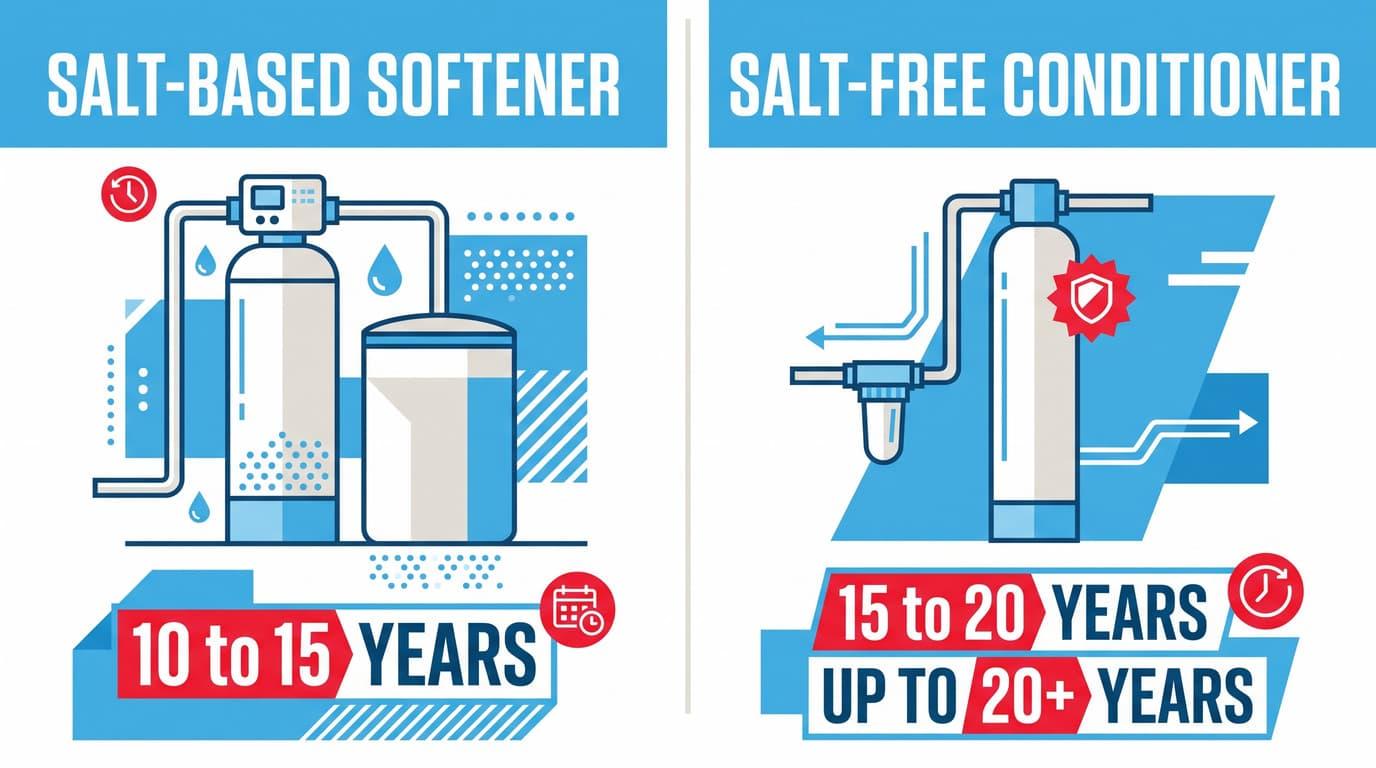
A salt-based system’s water softener lifespan commonly falls in the 10 to 15 year range. Its typical lifespan varies with maintenance, water quality, and system design. Some reach 20 years, but that is possible rather than guaranteed. A well-maintained older system that still delivers consistently softened water may have useful life left; a newer one that was undersized or poorly maintained may need attention sooner.
Conventional salt-based softeners use ion exchange to remove hardness minerals. Resin beads capture calcium and magnesium, while a salt solution regenerates the resin so it can keep treating incoming water. The resin bed, control valve, seals, and electronic components wear at different rates over time, which means one failed part does not necessarily call for a new system.
Salt-free water conditioners work differently. They aim to reduce scale formation rather than remove hardness minerals through ion exchange, so their performance and service life should not be compared directly with those of salt-based softeners. Check the manufacturer’s specifications instead of assuming every system follows the same replacement timeline. Many salt free conditioners last about 15 to 20 years, and some can last over 20 years with proper care.
What Makes a Salt Lake City Water Softener Wear Out Faster?
Water hardness is not identical across the Salt Lake Valley. The U.S. Geological Survey explains that hardness comes primarily from dissolved calcium and magnesium, and the amount reaching your home depends on its water source. Before deciding your softener is wearing out, check the hardness of the water entering your home and compare it with the treated water.
| Factor | Why it matters | What helps |
|---|---|---|
| Water hardness and iron | Higher mineral loads can increase regeneration demand and shorten lifespan; iron and chlorine can damage resin beads over time. | Test incoming water and address iron where needed. |
| Household water use | More daily water use increases workload, exhausts softening capacity sooner, and can drive more frequent regeneration cycles. | Review settings when household needs change. |
| System size | An undersized unit may regenerate too frequently. | Match grain capacity to actual hardness and demand. |
| Salt and brine care | Salt bridges or sludge can interrupt regeneration. | Monitor salt and follow tank-cleaning instructions. |
| Installation and component quality | Poor setup or worn valves and seals can cause recurring trouble, while better-built water softener systems with high-quality components generally last longer. | Have a technician assess plumbing, settings, and wear. |
These factors often work together. A busy household with an undersized softener, for example, may trigger more frequent regeneration and higher salt consumption. Proper sizing and programming can help keep those cycles in check, and sediment or debris in the water can also affect water softening performance.
When Your Water Softener Starts Losing Performance
A failing softener does not always stop working altogether. These changes can point to a maintenance issue, an individual worn component, or a broader decline in performance. Here is what each symptom may tell you.
Hard Water Symptoms Return at the Tap
White residue on faucets, cloudy glassware, stiff laundry, or soap that no longer lathers well are signs of returning hard water symptoms and may mean the unit is no longer functioning properly. Test water hardness with a hardness test kit before assuming the resin is exhausted.
Salt Consumption Changes Without Explanation
A sudden jump in salt consumption to more salt can indicate overly frequent regeneration or incorrect settings, and changing salt usage can help diagnose reduced efficiency or a fault.
Salt that barely moves, using less salt even while hard water returns, may point to a salt bridge or a brine-draw problem.
Regeneration Becomes Too Frequent or Unreliable
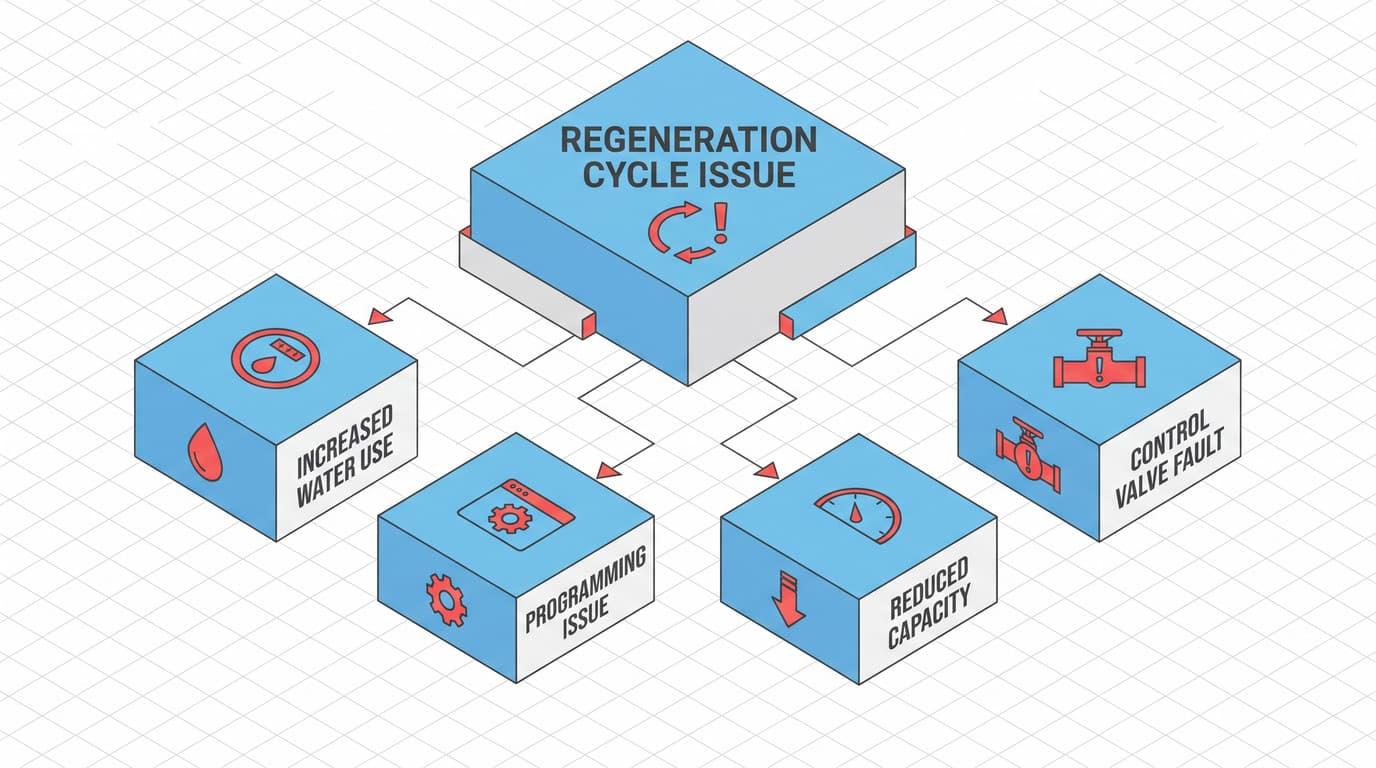
Frequent regeneration cycles can reflect increased household water use, a programming issue, reduced capacity, or a malfunction. A cycle that fails to complete may indicate a control valve or brine-system fault, and repeated cycle problems can mean the resin bed is failing. If efficiency continues to decrease over time, replacement may make more sense than repair.
Leaks or Excess Water Appear Around the System
Unusually high standing water in the brine tank, leaks near fittings, or moisture around the unit call for inspection. A cracked tank is more serious than a worn seal or loose connection.
Water Pressure Drops, or Flow Becomes Restricted
Reduced water flow can have several causes, including a restricted pre-filter, fouled resin, or a plumbing issue elsewhere. A technician can isolate the softener to find the source.
Unusual Noises or Control Errors Interrupt Operation
Unexpected valve noises, error codes, or a nonresponsive control panel can indicate mechanical or electrical wear. Record the error message and avoid dismantling pressurized components.
These symptoms are worth investigating, but none proves the whole system has failed. Start with a hardness test and the basic checks your manual allows, then have a technician assess recurring problems before committing to replacement.
How to Fix a Water Softener Before Considering Replacement
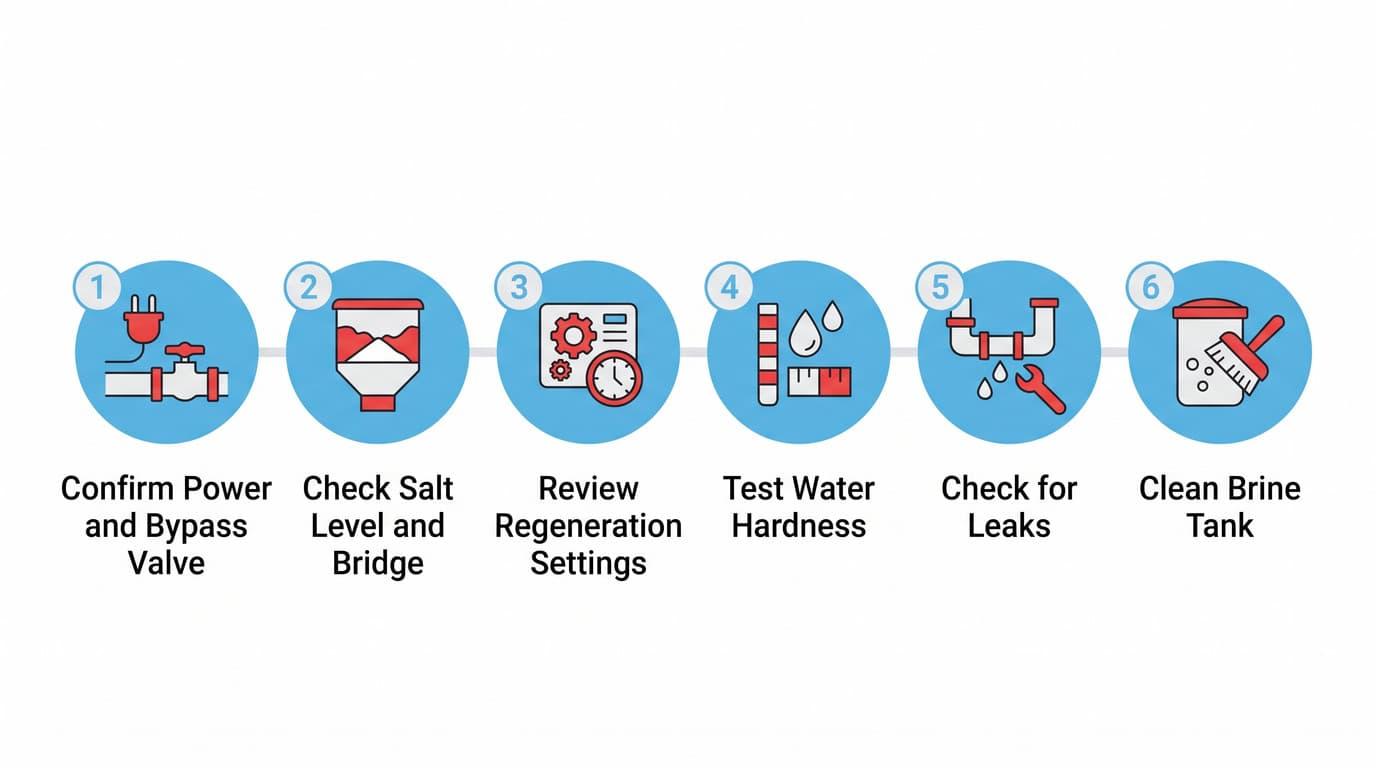
Some of the most common problems begin with settings or salt rather than a major component failure. Start with the checks your owner’s manual allows:
- Confirm the unit is powered on and the bypass valve is in the service position.
- Check the salt level, use high-purity salt to reduce brine tank residue, and look for a hard crust or salt bridge in the brine tank.
- Review the programmed hardness, time, and regeneration settings against your manual.
- Test water hardness before and after the softener to confirm whether treatment is working.
- Check for visible leaks without opening the control valve or disconnecting pressurized lines.
- If buildup is present, brine tank clean steps in your manual can help you keep the brine tank clean so proper brining is not disrupted.
An existing softener may return to normal operation after correcting these maintenance issues or repairing a valve-related fault.
If your manual permits a manual regeneration cycle, it may help confirm whether the unit can restore softening performance. Do not use sharp tools to break a salt bridge or attempt valve, electrical, or plumbing repairs without the appropriate training. A recurring fault, persistent hard water, or suspected resin damage is a good reason to schedule professional service.
Repair or Replace? Compare the Condition, Not Just the Age
When you are deciding whether to repair a water softener or replace your water softener, the most useful comparison is the cost of the fix against the unit’s remaining reliability and how well it meets your household’s needs.
| What you find | Repair may make sense | Consider replacement |
|---|---|---|
| Age and performance | Still softens well; one isolated issue. | Older system with declining results, where the age of the unit matters more; many systems reach system replacement territory after about 10 to 15 years. |
| Repair history | First valve, seal, or setting-related fault. | Repeated breakdowns or unavailable parts. |
| Tank and resin | Serviceable hardware; problem can be isolated. | Cracked tank or extensive resin deterioration. |
| Capacity and efficiency | Correctly sized for current demand. | Frequent cycles due to persistent undersizing. |
| Total cost | Reasonable repair with expected useful life. | Major repair approaches the value of a suitable new system, and excessive repair bills can make replacement the more practical choice. |
| Technology | Controls and performance still meet current needs. | Older unit uses outdated technology, making a newer, efficient model worth considering. |
We can assess the current hardness, inspect the control valve and brine system, and explain whether a repair is likely to restore dependable soft water. Our water softener repair and installation services help you compare the practical options before committing to a new unit.
Repair or Replace My Water Softener
What to Check When Replacing an Older Water Softener
If replacement makes more sense, start with the water your home receives today rather than simply ordering the same size again. Salt Lake City Public Utilities’ water reports offer useful context for customers in its service area, but other valley communities may use different suppliers. Your current hardness test, household demand, and household size should guide the choice because they affect how often the unit regenerates.
- Get an updated hardness test and check iron levels where relevant.
- Size the system for household water usage, measured hardness, and the required grain capacity instead of buying only on price from a big box store.
- Compare regeneration controls, salt consumption, and water use rather than price alone; a newer system may lower operating costs by using less salt and water or regenerating only when needed.
- Ask whether a pre-filter or other pretreatment is appropriate for the incoming water.
- Confirm the installation scope, drain access, warranty coverage, and total installed estimate, since installation quality affects long-term reliability and lifespan.
A properly sized system can deliver consistent soft water without unnecessary regeneration. If you are considering a different type of treatment, understanding how salt-free systems compare matters because conditioners may help limit scale without removing the hardness minerals that ion exchange softeners remove.
Maintenance Habits That Help Your Softener Last
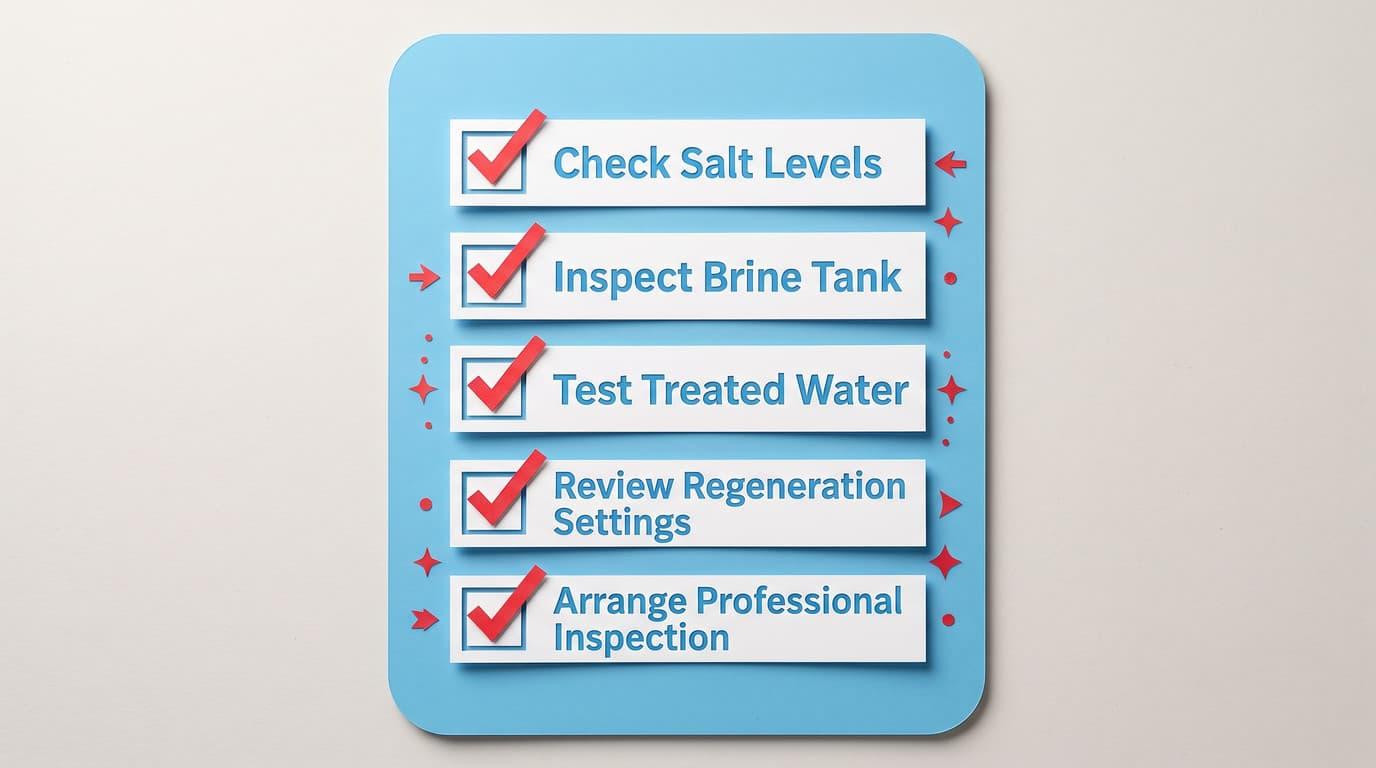
You cannot prevent every component from wearing out, but regular maintenance can extend a softener’s service life significantly and make performance changes easier to spot before they become bigger problems.
- Check salt levels regularly and use the salt grade recommended by the manufacturer; with proper maintenance and proper care, some units can last up to 20 years.
- Inspect the brine tank for bridging or buildup, and clean it according to your manufacturer’s instructions.
- Test treated water periodically, especially when scale or spotting returns.
- Review regeneration settings after changes in water usage or water hardness.
- Arrange professional inspection when you notice leaks, irregular cycles, or persistent hard water, and schedule annual servicing for consistent maintenance and steady performance.
There is no universal rule that every resin bed must be replaced after eight or ten years. Some professionals recommend replacing resin around 8 to 10 years for optimal efficiency, and routine maintenance can even double a water softener’s usable years, but resin condition still depends on the water and operating history, so testing and inspection are more useful than replacing it on a fixed schedule.
Keep Your Soft Water Working Without Guesswork
How long do water softeners last? For most homes, around 10 to 15 years, but age alone doesn’t tell the whole story. Returning scale, changing salt use, and unreliable regeneration tell you more about what needs attention. Testing and a careful inspection can help determine whether a straightforward repair will restore soft water or whether a replacement is the smarter long-term choice.
We can help you turn those findings into a clear plan. Superior Water & Air has served Utah communities since 1956, and our team can diagnose water softener problems, explain practical repair options, and recommend a properly sized replacement when the existing system no longer makes sense to keep.
Frequently Asked Questions
These are a few additional questions homeowners often ask when a water softener starts showing its age.
Who services water softeners?
A water treatment technician or plumbing professional with experience in softener valves, resin systems, and regeneration controls can diagnose most problems. Ask whether the provider services your specific brand and model.
Can a water softener stop working even when the salt tank is full?
Yes. A salt bridge, blocked brine line, incorrect settings, or valve problem can prevent proper regeneration even when salt is present.
How do I know whether my resin needs replacing?
Hard water that persists after settings and brine problems have been ruled out may indicate fouled or depleted resin. A technician can assess the resin and other causes before recommending replacement.
Can I replace my water softener myself?
Replacement involves plumbing connections, drainage, system sizing, and startup settings. Some homeowners may be equipped to handle it, but professional installation helps verify correct setup and operation.
Will a new softener reduce my water bill or salt use?
A properly sized, efficiently controlled system may avoid unnecessary regeneration compared with a poorly configured older unit. Actual savings depend on your water hardness, usage, and the equipment being replaced.
Recent News
How Often Furnace Maintenance Should You Schedule in Salt Lake City?
November 10, 2026
How Much Does Furnace Repair Cost in Salt Lake City?
November 5, 2026
Should I Replace 20 Year Old Furnace? A Salt Lake City Repair vs. Replacement Guide
November 5, 2026
9 Signs You Need a New Furnace Before It Fails This Winter
November 5, 2026
What Is a Furnace Tune-Up? What’s Included and What It Costs in Salt Lake City
October 22, 2026
How Much Does It Cost to Replace a Furnace in Salt Lake City?
October 14, 2026