
Call or Text
801-438-4793Back to Blog
Should I Replace 20 Year Old Furnace? A Salt Lake City Repair vs. Replacement Guide
November 5, 2026
Your HVAC technician has just handed you a furnace repair estimate, and now you’re wondering whether fixing a 20-year-old system is worth the money. The repair might get your heat running again, but how much longer will the furnace last? And would that money be better spent on a replacement?
If you’ve searched “should I replace a 20-year-old furnace,” the answer depends on more than age alone. A minor repair may still be worthwhile if the system is safe and reliable, while recurring breakdowns, costly repairs, or declining efficiency can make replacement the smarter investment. At Superior Water & Air, we help Salt Lake City homeowners compare both options so they can make a confident, informed decision.
Key Takeaways
- A 20-year-old furnace is beyond the age when replacement should be evaluated, but it may still be repairable.
- Safety findings, especially heat exchanger or venting problems, take priority over cost comparisons.
- An affordable, isolated repair may be worthwhile; repeated or major repairs change the calculation.
- Newer furnaces can offer higher efficiency and steadier comfort, but actual savings depend on your home.
- Get a written diagnosis and a complete installation estimate before deciding.
Is a 20-Year-Old Furnace Too Old to Repair?
Not necessarily. Many gas furnaces are discussed in terms of a roughly 15-to-20-year life expectancy, but maintenance, installation quality, usage, and condition all matter. ENERGY STAR’s heating replacement guidance recommends considering replacement once a furnace is over 15 years old, particularly when repairs and energy bills are increasing.
If your original furnace is working fine, passes a professional safety inspection, and only needs minor repairs, keeping it for now may be cost-effective. If breakdowns are recurring or a major component fails, the money spent fixing an aging furnace may be better applied toward a new system.
When Furnace Repair Makes Sense, and When Replacement Wins
The most useful furnace repair vs. replacement comparison starts with what the technician actually finds, not the furnace’s birthday. Here is how to weigh the common scenarios.
| What you find | Repair may make sense | Replacement deserves consideration |
|---|---|---|
| Condition and safety | No safety concerns; one isolated fault | Unsafe heat exchanger or venting condition |
| Repair history | Few previous repairs | Repeated service calls or multiple failing parts, especially on an older system |
| Repair estimate | Modest cost relative to a new unit | Major repair approaching a large share of replacement cost |
| Heating performance | Comfort improves after a targeted fix | Persistent poor heating despite proper airflow and service |
| Plans for the home | Short-term use with a dependable system | Long-term comfort and lower fuel use are priorities |
A common guideline is to compare a major repair with half the installed cost of a new furnace; if repairs exceed 50% of a new furnace’s cost, replacement usually makes more sense. The “$5,000 rule” is another repair-or-replace tool that multiplies age by repair cost, and at 20 years even a $250 repair reaches that threshold. Frequent repairs on an older furnace are also a common sign it may be time to replace your furnace. Neither rule should override a sound diagnosis. We can identify the fault, explain the repair option, and provide flat-rate pricing so you can make a realistic comparison.
Find Out If My Furnace Is Repairable
Which Problems Matter Most on an Older Furnace?
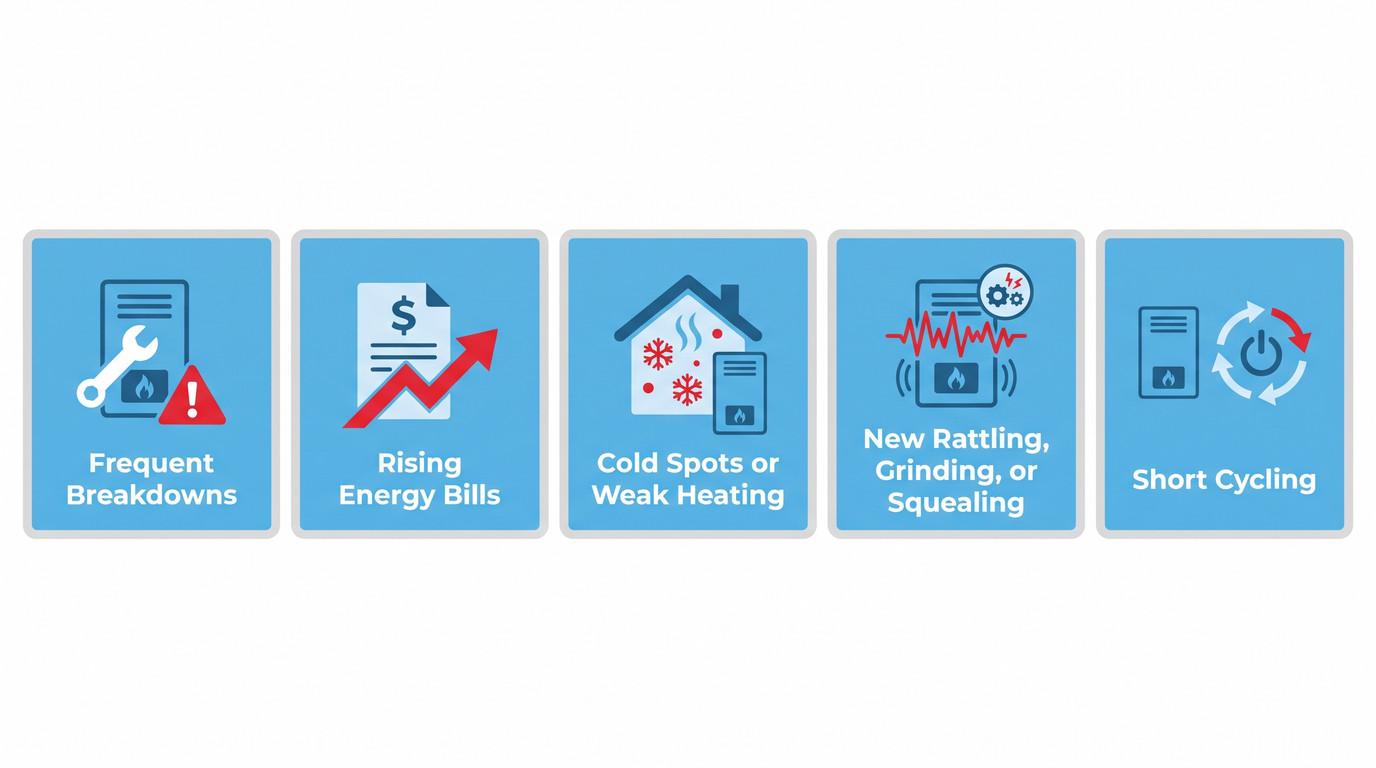
Some warning signs point to ordinary service needs; others justify a closer look at the entire heating system. Watch for the following patterns rather than treating any single symptom as proof you need replacement.
- Frequent breakdowns: Repeated ignition, control, or blower motor problems may mean several components are aging together. In older furnaces, major components can fail unexpectedly, and wear over time often leads to more repairs.
- Rising energy bills: If natural gas use rises without a clear weather or thermostat change, ask about furnace performance, duct losses, and maintenance. Higher bills can also be a sign replacement is needed because older units use more energy.
- Cold spots or weak heating: Uneven temperatures can come from ductwork, insulation, or airflow, not just a failing furnace. It can also mean the system is losing heating capacity and struggling to maintain a consistent temperature throughout the house.
- New rattling, grinding, or squealing: An HVAC technician can check the blower motor, inducer motor, and other moving parts. Strange sounds may also point to serious furnace issues.
- Short cycling: Rapid starts and stops can result from a dirty filter, airflow restrictions, controls, or improper sizing.
A failed fan belt on equipment that uses one, a dirty filter, or a single faulty control may be straightforward to address. By contrast, a costly blower or inducer motor repair on an old unit with a history of failures deserves a replacement quote alongside the repair estimate.
Heat Exchanger Safety Is a Separate Decision

The heat exchanger keeps combustion gases separate from the air circulated through your home. Cracks in the heat exchanger can cause carbon monoxide leaks, and older furnaces carry a higher risk of cracking and leaking dangerous gases than a brand new furnace. A yellow or irregular burner flame in a gas furnace can indicate carbon monoxide production, while soot, rust, or unusual odors may signal serious furnace issues and warrant professional evaluation, but none of these signs alone proves a crack or confirms carbon monoxide.
Carbon monoxide has no smell or color. The CDC’s carbon monoxide safety guidance identifies headache, dizziness, nausea, and confusion as possible symptoms. If a CO alarm sounds or someone may be experiencing CO poisoning, leave the home immediately and call emergency services. Do not restart a furnace that a qualified professional has declared unsafe.
Our technicians can evaluate combustion, venting, and equipment condition, then explain whether a safe repair is possible or furnace replacement is the appropriate path. Safety findings are not a situation for do-it-yourself troubleshooting.
What Does Repairing or Replacing a Furnace Cost?
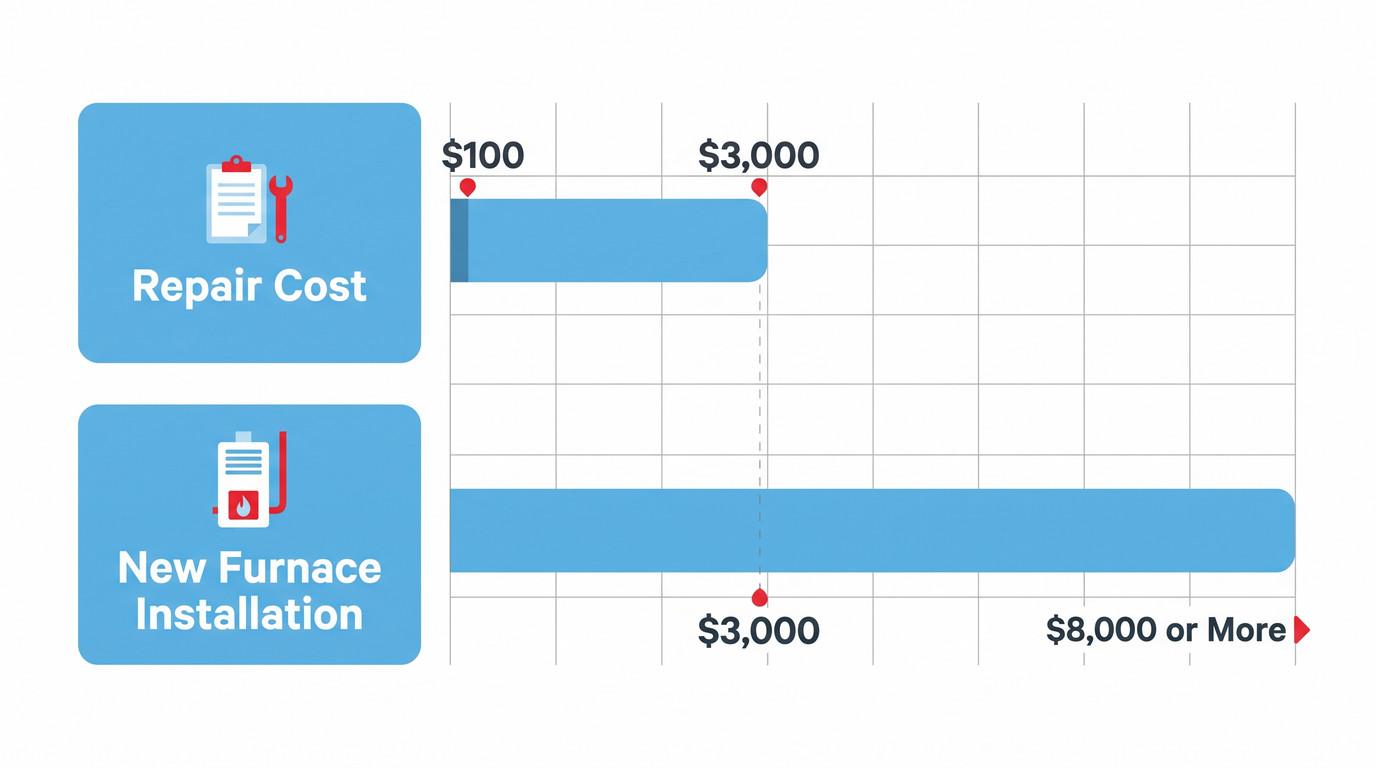
Repair costs vary with the failed component, labor, and availability of parts, and they can range from $100 to $3,000. A modest ignition repair and a major heat exchanger or blower replacement are very different expenses. Installation cost also depends on furnace size, efficiency, venting, gas and electrical connections, ductwork, and removal of the old unit.
For perspective, HomeAdvisor’s national furnace cost estimates show new furnace installation generally ranges from $3,000 to $8,000 or more, and costs for natural gas furnaces vary by system and job details. These are national benchmarks, not Salt Lake City quotes or Superior Water & Air prices. We provide flat-rate pricing so you can compare your actual options, and utility rebates can offset part of the initial cost when available.
What Do You Gain With a New Furnace?

A new furnace may deliver steadier heat and better energy efficiency. Annual fuel utilization efficiency (AFUE) measures the share of fuel converted into usable heat, and when comparing options, consider energy efficiency ratings because modern furnaces can reach up to 98% AFUE and waste only 5-10% of the energy they use, while older systems use more energy. A modern furnace can offer better efficiency, use less fuel, and produce lower carbon emissions, while ENERGY STAR recommends considering a qualified replacement once a furnace is over 15 years old. The International Code Council’s technical overview explains why high-efficiency condensing models can also require changes to venting and condensate drainage. Actual savings depend on your home, fuel rates, and installation quality.
Depending on the model, staged heating, variable-speed blowers, and compatible smart thermostats can provide more even heating and better temperature consistency throughout the house. Modern furnaces can improve indoor air quality with better filtration and humidity control, while a more efficient setup may reduce energy consumption and emissions.
You can also compare a heat pump or a hybrid system that combines electric heating with a gas furnace. These options have different upfront costs, electricity use, and cold-weather performance. Replacing the furnace does not automatically mean you need a new air conditioner, though we should check air conditioning coil and airflow compatibility when planning the installation.
If a new furnace is the better fit, we can help you compare efficiency levels and heating options, assess sizing and venting requirements, and understand what the installation involves. Proper furnace sizing is crucial for heating performance, and the right energy efficient system can significantly reduce monthly heating bills, help you save money, and lower your carbon footprint. Our team will walk you through the practical differences so you can choose a system that suits your home and heating needs.
Compare Furnace Installation Options
Before You Approve a Replacement Quote
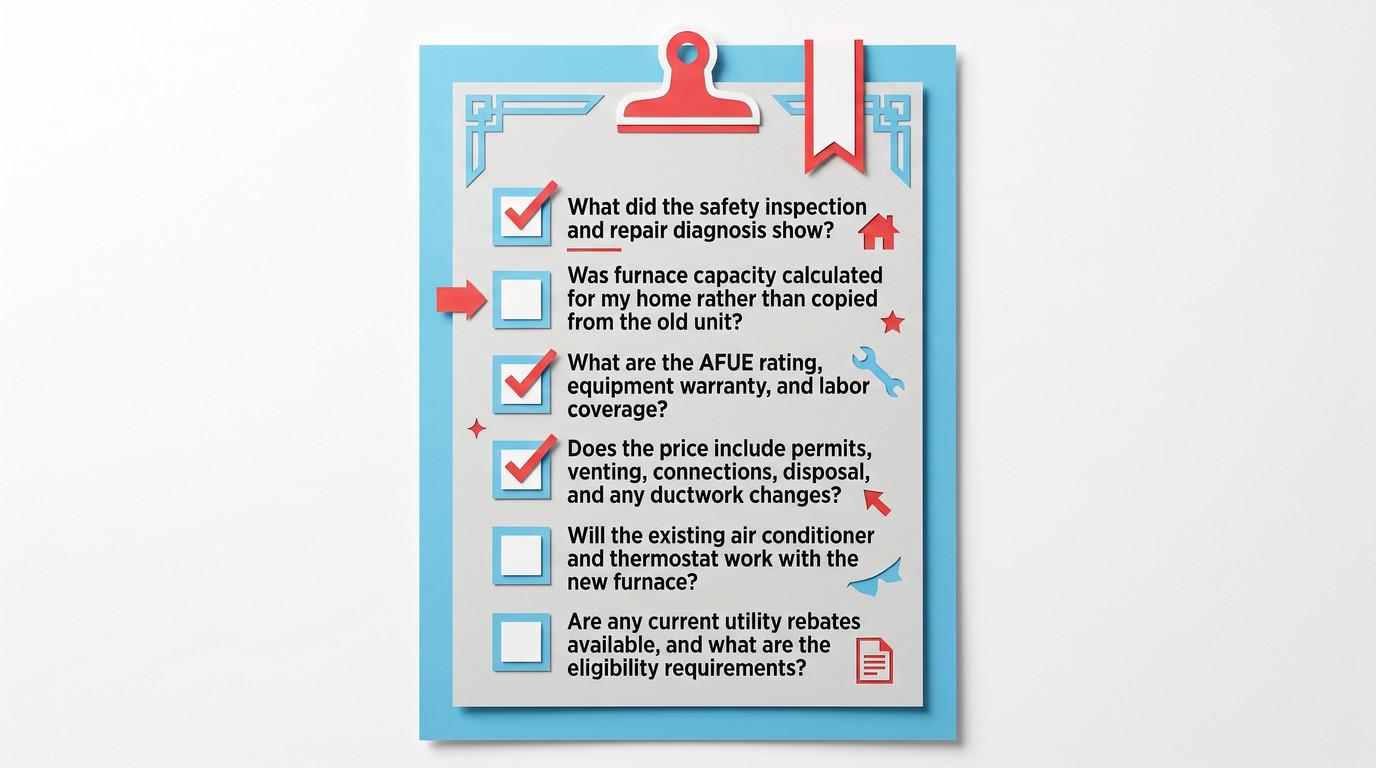
The lowest upfront cost is not always the best long-term value. A properly sized furnace with compatible ductwork and a clear installation scope is more useful than a high-efficiency model selected by its rating alone. Ask your HVAC professional these questions:
- What did the safety inspection and repair diagnosis show?
- Was furnace capacity calculated for my home rather than copied from the old unit?
- What are the AFUE rating, equipment warranty, and labor coverage?
- Does the price include permits, venting, connections, disposal, and any ductwork changes?
- Will the existing air conditioner and thermostat work with the new furnace?
- Are any current utility rebates available, and what are the eligibility requirements?
Check current rebate terms before counting on incentives. Federal energy-efficiency tax rules have changed, and a rebate or credit should not be assumed available for a 2026 installation without verifying the applicable program and dates.
Make the Decision Before the Coldest Day
Another repair might get your furnace through the next cold snap, but it may not settle the bigger question: should I replace my 20-year-old furnace? Compare the safety findings, repair history, and total cost of keeping it with the long-term value of a properly sized replacement, and plan ahead before aging HVAC equipment fails during peak winter demand and forces a rushed decision.
Superior Water & Air has served Utah homeowners since 1956. Our team can inspect your furnace, explain the repair options, and provide a flat-rate estimate if replacement makes more sense. That way, you can choose with confidence before winter makes the decision urgent.
Get a Clear Answer for My Furnace
Frequently Asked Questions
Still weighing the options? These answers address the practical questions that often come up after a homeowner starts comparing estimates.
Can I replace my furnace without replacing my air conditioner?
Often, yes. Your HVAC professional should verify that the existing AC coil, blower airflow, controls, and other components are compatible with the new furnace. Replacing both systems is not automatically required.
Is a high-efficiency furnace always worth the extra upfront cost?
Not always. Compare the price difference, expected fuel use, warranty, and how long you plan to own the home. Better AFUE can reduce natural gas consumption, but it does not guarantee a specific payback period.
Can I control a new furnace remotely?
Some modern furnaces work with compatible Wi-Fi or smart thermostats that let you adjust temperatures remotely. Confirm compatibility with the exact furnace and thermostat models before buying.
Will regular maintenance extend the life of a 20-year-old furnace?
Regular maintenance can help identify wear, preserve safe operation, and prevent some avoidable breakdowns. It cannot reverse old age or guarantee how many more winters the furnace will last.
Should I schedule replacement in summer or wait until winter?
Planning before peak heating demand can give you more time to compare options and schedule work. If a technician identifies an unsafe condition, however, do not wait for a preferred season to address it.
Recent News
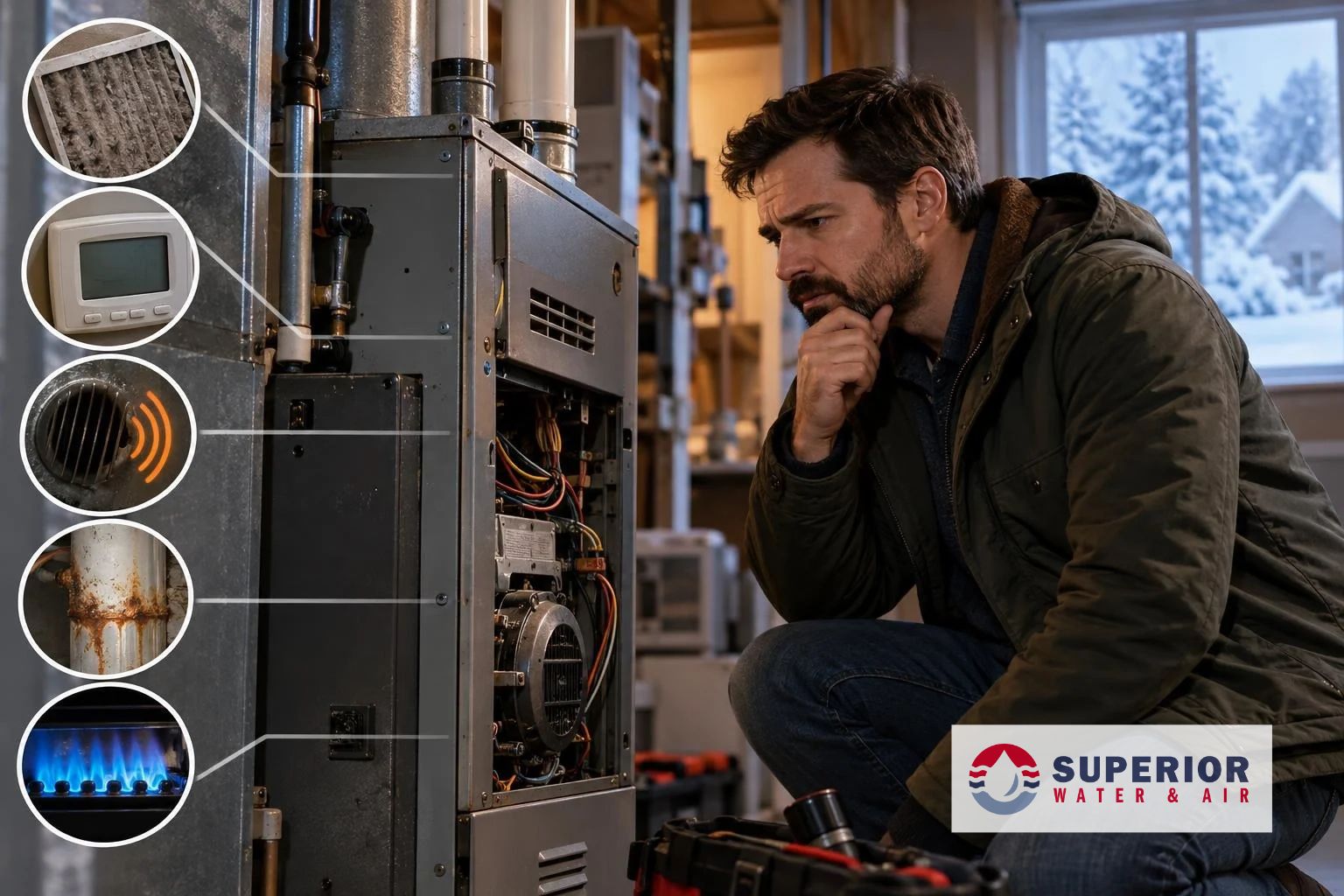
9 Signs You Need a New Furnace Before It Fails This Winter
November 5, 2026
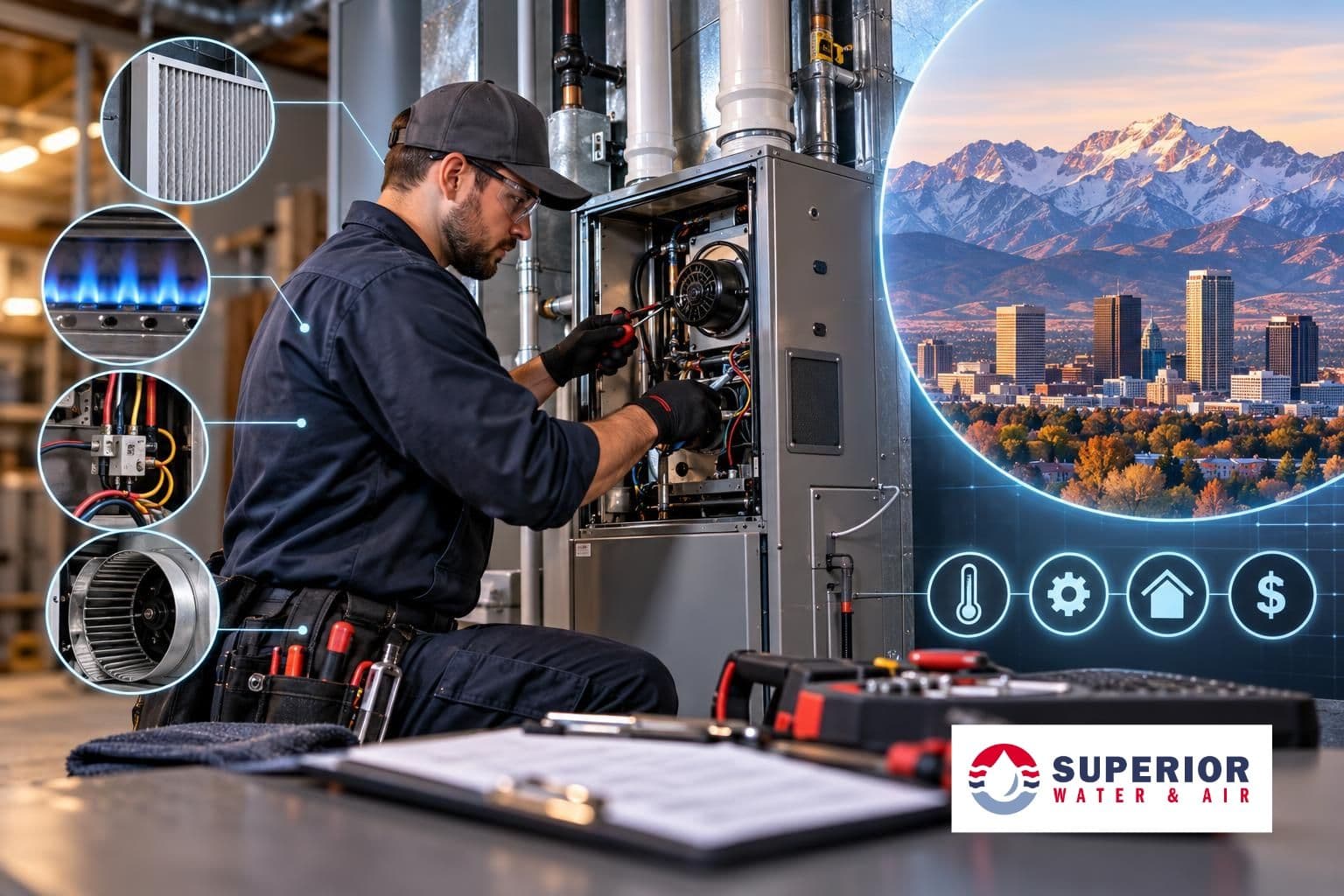
What Is a Furnace Tune-Up? What’s Included and What It Costs in Salt Lake City
October 22, 2026
How Much Does It Cost to Replace a Furnace in Salt Lake City?
October 14, 2026
How to Prevent Mold in a Utah Home After Plumbing Repairs
September 11, 2025
A Utah Homeowners’ Guide to Smart Thermostats
September 10, 2025
My Water Heater’s ECO Switch Keeps Tripping – What Does It Mean?
August 21, 2025