Call or Text
801-438-4793Back to Blog
Whole Home Water Filtration vs. Reverse Osmosis: Which Do You Need in Salt Lake City?
November 20, 2026
Your kitchen tap tastes like chlorine, but your shower leaves white spots.
Would whole-home filtration fix both, or is reverse osmosis the better investment?
The key difference between whole-home water filtration and reverse osmosis is what each system treats: Whole-home filters address selected concerns across your plumbing, while under-sink RO targets drinking and cooking water at one faucet.
Hard-water scale may need a softener instead.
At Superior Water & Air, we help Salt Lake City homeowners match treatment to their water quality and household needs. Here’s how the systems compare on contaminant reduction, costs, maintenance, and when using both makes sense.
Key Takeaways
- Choose whole-home filtration when sediment, chlorine taste, or odor affects water throughout your home.
- Choose under-sink reverse osmosis when your priority is drinking and cooking water and a certified system targets the contaminants of concern.
- Standard carbon and sediment filters don’t soften hard water; a water softener addresses calcium and magnesium scale.
- Whole-home systems usually cost more upfront and require main-line access; RO needs under-sink space and periodic filter and membrane changes.
Whole Home Water Filtration vs. Reverse Osmosis: Key Differences
| Factor | Whole-home water filtration | Under-sink reverse osmosis |
|---|---|---|
| Treatment point | Point of entry: main water line | Point of use: kitchen faucet |
| Best fit | Household-wide sediment, chlorine taste, or odor | Targeted drinking-water treatment |
| Installation | Main-line plumbing and space for equipment | Sink cabinet, dedicated faucet, and drain connection |
| Maintenance | Media or cartridge changes by model and water use | Prefilters, postfilter, and membrane on separate schedules |
| Water discharge | Standard cartridge/carbon filtration generally has no continuous reject stream; some backwashing models use water | Produces reject water; efficiency varies by model |
The difference starts with where each system connects to your plumbing. A whole house system is installed on the main line and treats every gallon entering the entire home. Reverse osmosis is usually installed under the kitchen sink and treats water at a single faucet for high quality drinking water. These systems do different jobs, and many homeowners combine them for broad coverage plus more purified water for drinking and cooking.
How Does Whole-Home Water Filtration Work?
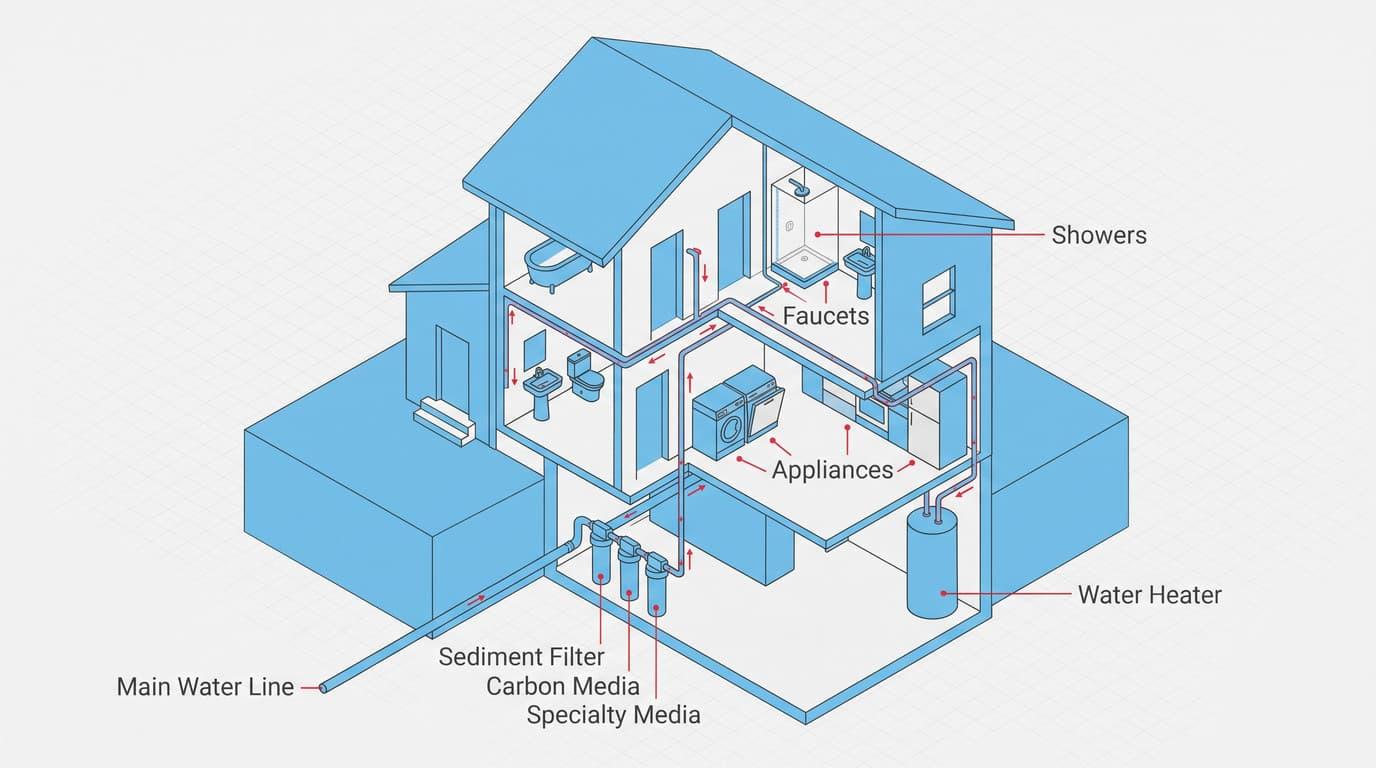
A whole-house filtration system treats water at the main water line before it reaches your faucets, showers, appliances, and water heater.
This kind of filtration technology should be matched to your source water. In most homes, whole house filters commonly target sediment, chlorine, and some chemical contaminants. Sediment filters catch grit and rust; carbon media can reduce chlorine and improve water taste by cutting unpleasant tastes and odors. With the right specialty media, whole house water filtration systems can also address iron or hydrogen sulfide.
If you’re tired of rinsing grit out of faucet aerators or noticing a chlorine smell every time you shower, tell us where it happens and how often. For many municipal tap water supplies, high chlorine content and sediment are common reasons homeowners choose house water filtration. At Superior Water & Air, we’ll review your water quality and how much water your household uses when several fixtures run at once. We’ll use those details to recommend a system sized for your home and explain what improvements you can expect.
Explore Whole-Home Water Filtration
What Is a Reverse Osmosis Water Filter System?
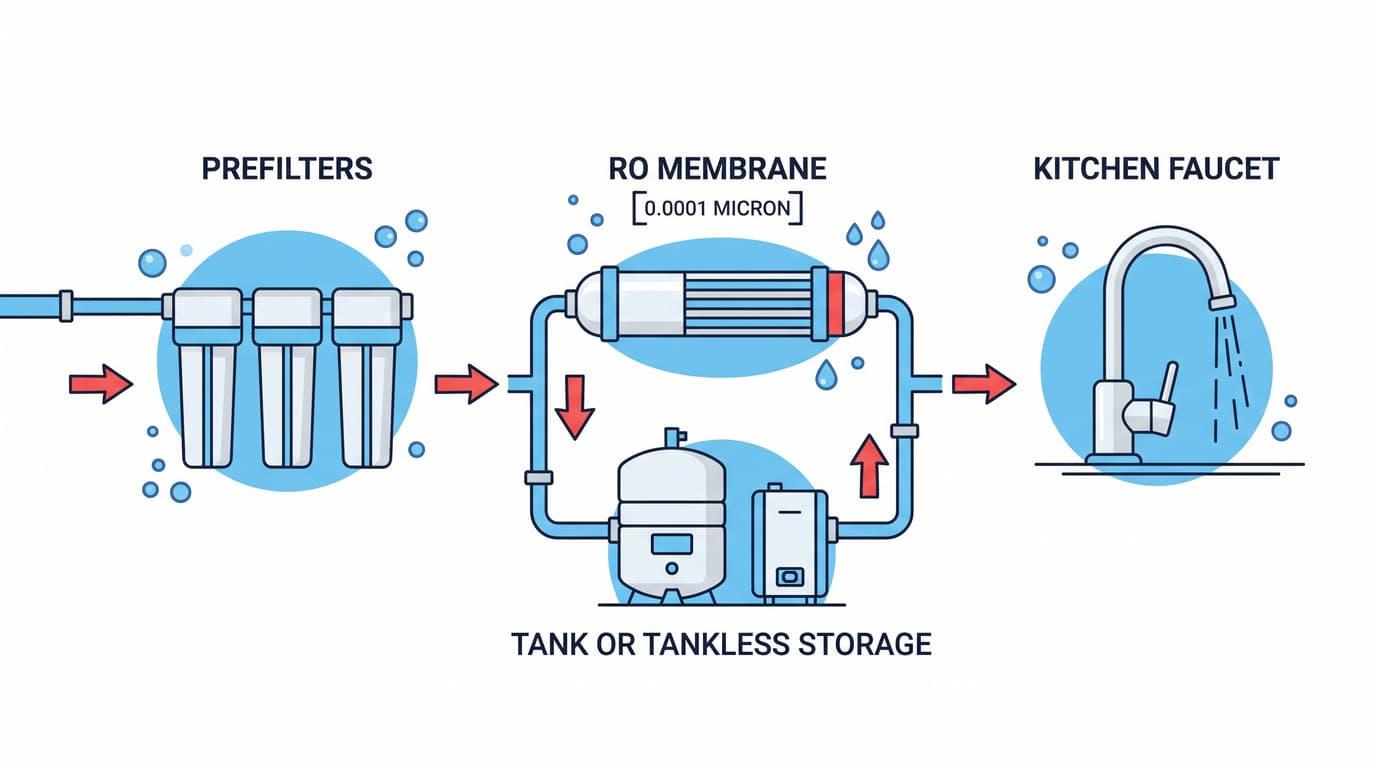
An under-sink reverse osmosis (RO) system treats water for drinking and cooking at a dedicated kitchen faucet. Here’s what happens between the cold-water supply and your glass.
- Water passes through prefilters. Depending on the model, these filters catch sediment and reduce substances such as chlorine before the water reaches the membrane.
- Pressure pushes water through the RO membrane. The reverse osmosis system uses water pressure to push water through a semipermeable membrane, typically around 0.0001 micron, to reduce dissolved solids and certain impurities. Certified systems can reduce contaminants such as lead and arsenic, and may reduce up to 99% of total dissolved solids under specified conditions. They may also reduce heavy metals under the conditions listed by the manufacturer.
- Treated water reaches the faucet. A tank-based system stores filtered water until you need it, while a tankless model filters it on demand. Some systems add a final filter to refine the taste or a remineralization stage to add minerals back.
If you keep buying bottled water because you dislike the taste from your kitchen tap, an RO system can give you another option for drinking and cooking. Installed at the kitchen sink, it can provide consistent access to high quality drinking water while reducing plastic waste and transportation emissions associated with bottled water. At Superior Water & Air, we’ll look at how you use water in the kitchen and help you compare tank and tankless models that fit under your sink. We’ll also walk you through filter changes and water use so you know what to expect day to day.
Explore Reverse Osmosis Systems
Which Contaminants Can Each System Reduce?
Filter media and RO membranes target different contaminants. Use the table to identify which type of treatment fits your concern, then verify the exact model’s claims.
| Water concern | Whole-home sediment/carbon filter | Certified under-sink RO |
| Sand, rust, visible sediment | Sediment media can reduce particles | Prefilter can capture particles |
| Chlorine taste and odor | Carbon media commonly used | Carbon prefilter or postfilter commonly used |
| Iron or hydrogen sulfide | Requires appropriate specialty treatment | Not a substitute for source-specific iron or sulfur treatment |
| Dissolved solids and hardness minerals | Standard sediment/carbon media do not remove them | RO membrane can reduce them at its faucet |
| Lead or arsenic | Only with a specific verified reduction claim | Choose a model certified for the exact contaminant |
| Bacteria or other microbes | Only with appropriate disinfection technology | Do not assume an ordinary RO unit makes unsafe water microbiologically safe |
Check each model’s certified reduction claims. NSF/ANSI 42 covers taste and odor, 53 covers specific health-related contaminants, and 58 covers RO. For PFAS, EPA advises checking the model’s specific certification. No standard guarantees removal of every contaminant.
How Much Does a Whole Home Water Filtration System Cost Compared With RO?
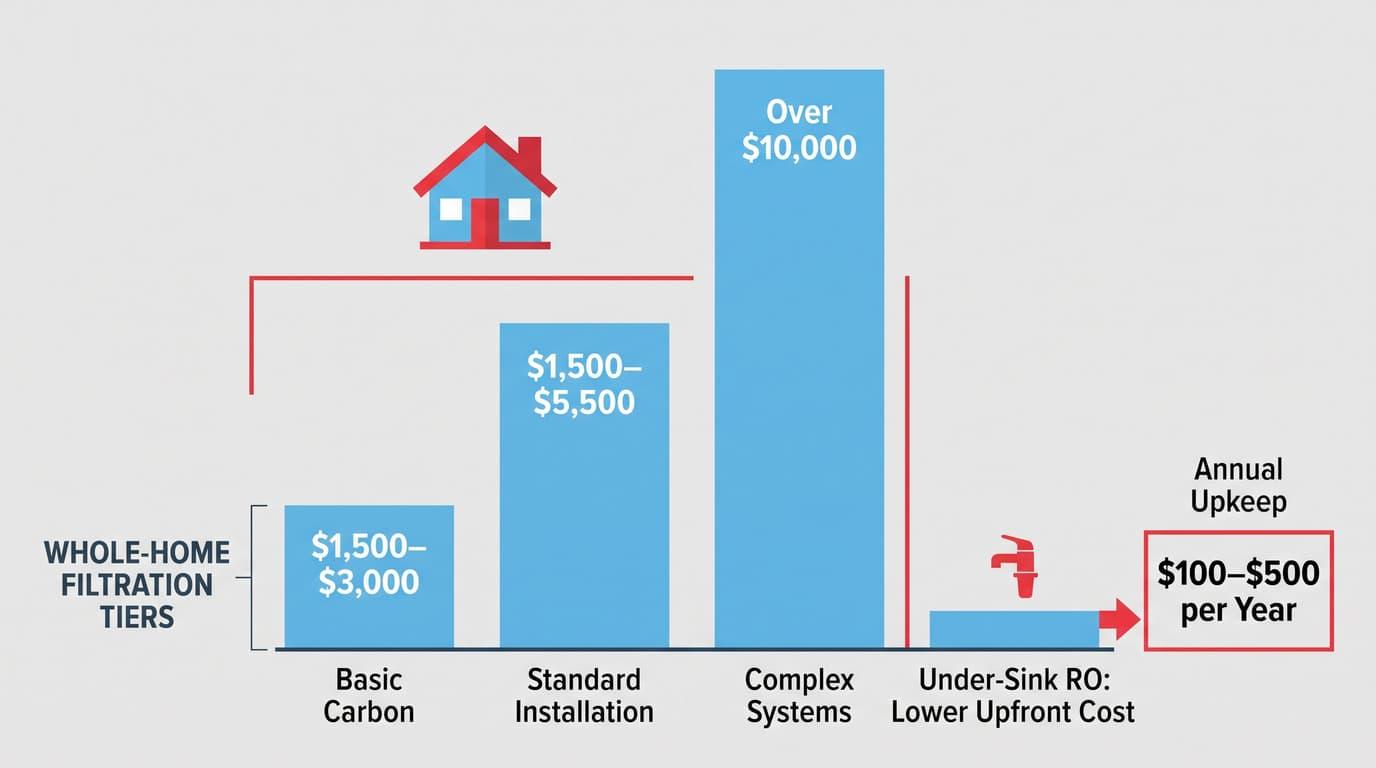
Once you know what your water needs, compare the price of installing and maintaining a system that can treat it.
Upfront Equipment and Installation Costs
Whole-home filtration typically costs more upfront because it treats water throughout the house. System size, filter media, and plumbing work affect the price.
HomeBuddy’s 2026 cost guide puts most whole-home filtration installations at $1,500–$5,500 nationally. Basic carbon systems cost about $1,500–$3,000 installed. Complex systems can exceed $10,000. Under-sink RO generally costs less upfront. Local quotes vary.
Compare the Full Cost of Ownership
Beyond the installed price, budget for replacement filters and any additional treatment. HomeBuddy estimates $100–$500 a year for whole-home filter upkeep. If hardness requires separate treatment, softener costs are additional.
Installation and Maintenance: What Homeowners Should Expect
Installation and filter access both affect what you’ll spend over time. Here’s what each setup requires.
Whole-Home Setup and Filter Changes
Whole-home systems generally need professional main-line installation and enough room for maintenance, and when treatment includes the right hardness-control stage, it can reduce hard water minerals to help protect plumbing and the water heater from scale buildup, corrosion, and related wear. Proper sizing helps preserve water pressure. Cartridge and tank-based filters have different replacement schedules, from months to several years.
Under-Sink RO Setup and Filter Changes
Under-sink RO needs cabinet space, a drain connection, and usually a dedicated faucet. Prefilters and postfilters often need replacement every 6–12 months; membranes may last several years. Follow the model’s instructions.
RO Water Waste and Efficiency
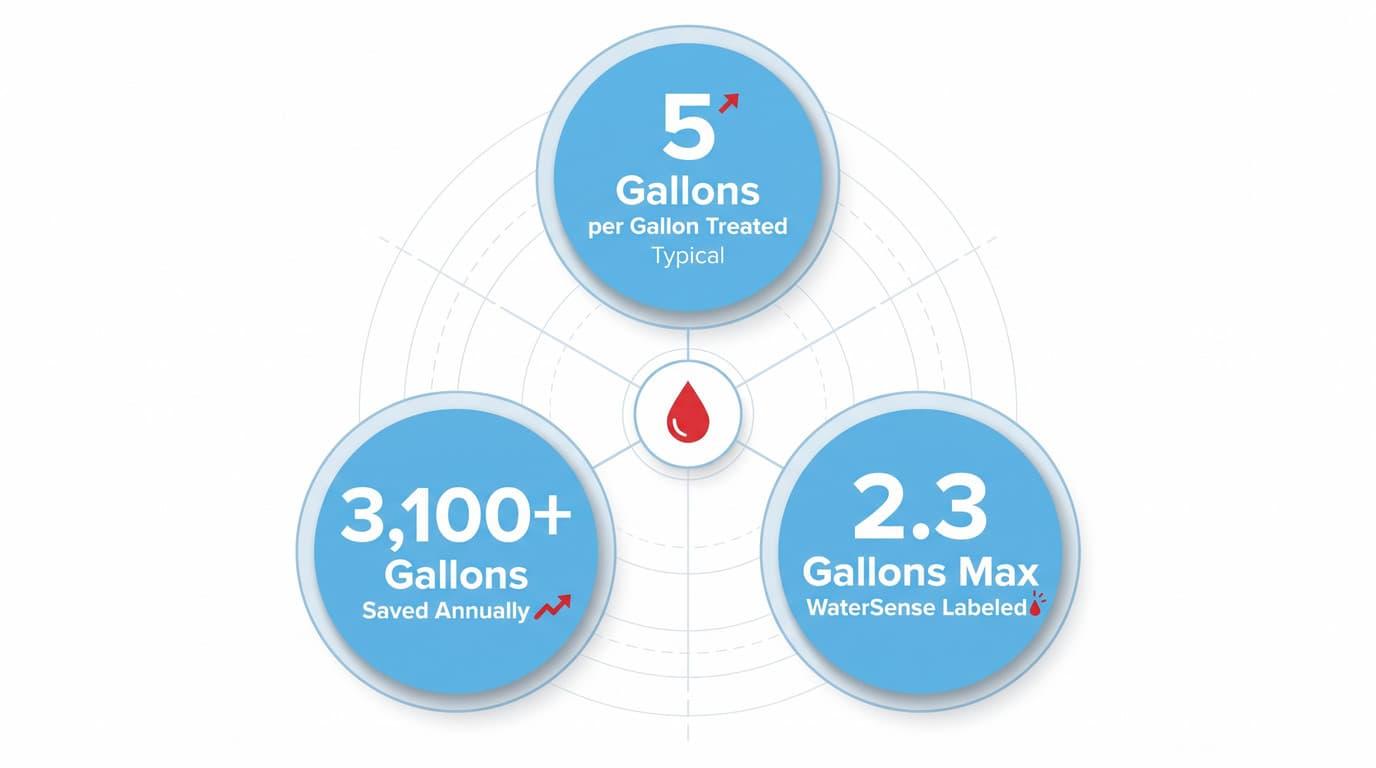
Filter changes are one part of RO upkeep. Water use also matters because RO produces reject water. EPA’s WaterSense guidance says typical systems discharge at least five gallons per gallon treated; WaterSense-labeled units must use no more than 2.3. EPA estimates a labeled replacement can save over 3,100 gallons annually.
Which Water Treatment Fits Salt Lake City Homes?
Once you know what each setup requires, use your local water conditions to narrow the options. Start with any scale you see and where your water comes from.
Why Hard Water Needs Separate Treatment
A softener treats hardness throughout the home. Under-sink RO can reduce hardness minerals at one faucet, but won’t prevent scale in showers or water heaters. If scale is your main concern, assess softening first.
Municipal Water vs. Private Wells
To see what else your water may need, start by considering your source water—whether your home uses municipal water or a private well—then review your utility’s annual quality report if you’re on city water and test your tap for specific concerns. Private wells need their own testing, including bacteria and locally relevant contaminants. Whole house filters treat all water entering a home, so the right setup depends on the source water and the contaminants shown by testing. Choose treatment based on results, not taste or odor alone. If results are unclear or point to multiple issues, consult a water specialist.
Can You Combine Whole-Home Filtration and Reverse Osmosis?
Yes. If your water test shows concerns across several fixtures and drinking water, you can install a whole-home filter at the main line and add an under-sink RO unit for drinking and cooking water.
If scale is also an issue, a water softener may be needed. Choose each stage to address a problem shown by your water test, rather than adding equipment automatically.
How to Choose the Right System for Your Home
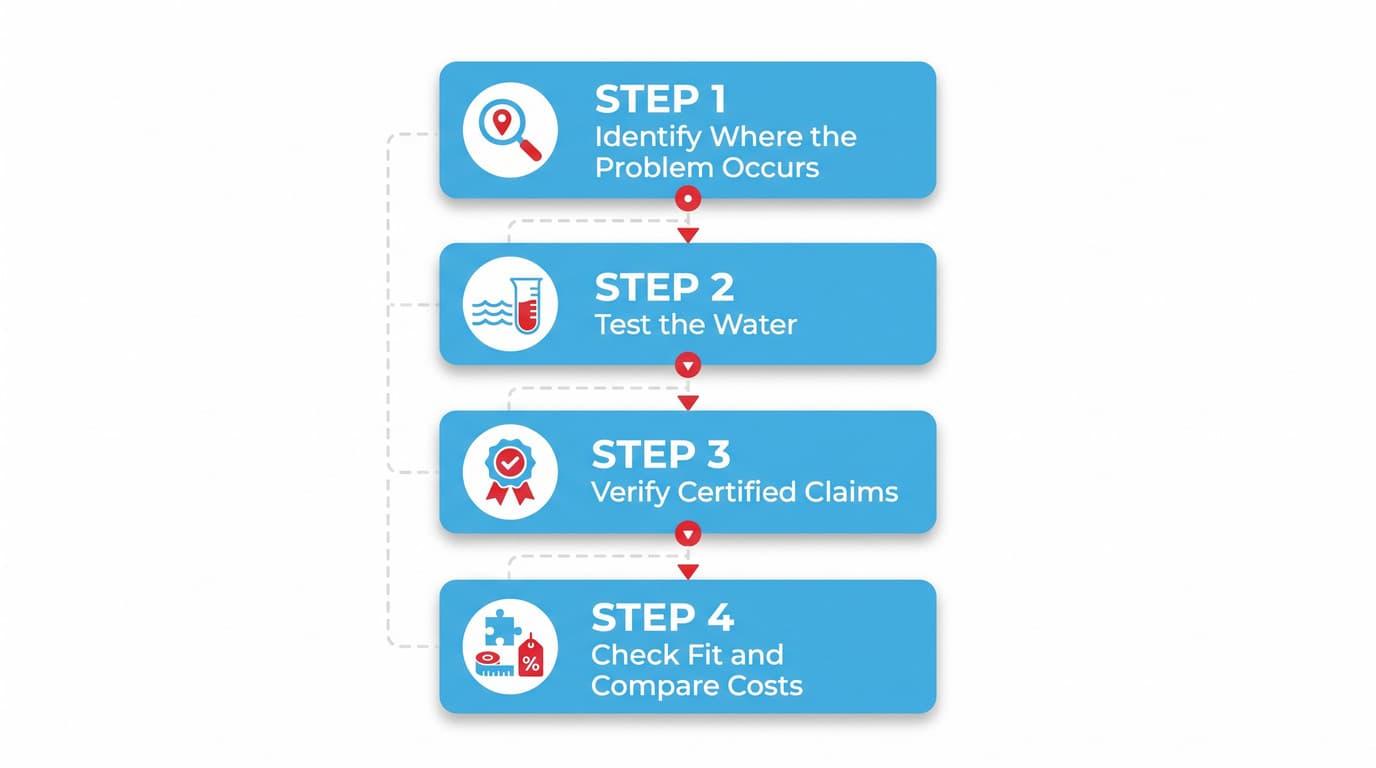
Use these four steps to decide whether you need one system or a combination before requesting a quote.
Step 1: Identify where the problem occurs
Check whether the issue affects showers and multiple taps, or only your drinking water. If it shows up across fixtures, start by assessing whole-home treatment. If the issue is limited to drinking water, consider a point-of-use system.
Step 2: Test the water
Once you know where the issue appears, test the water to identify what needs treatment, such as hardness, sediment, or specific contaminants.
Step 3: Verify the model’s certified claims
Use your test results to shortlist systems. For each model, confirm that its certified claims cover the specific contaminants you want to reduce.
Step 4: Check the fit and compare costs
For the models that meet your water treatment needs, confirm main-line access or under-sink space and check water-pressure requirements. Compare installation, filter replacement, and, for RO systems, water efficiency.
Explore Water Treatment Options
Whole Home Water Filtration vs. Reverse Osmosis: Choose What Your Water Needs
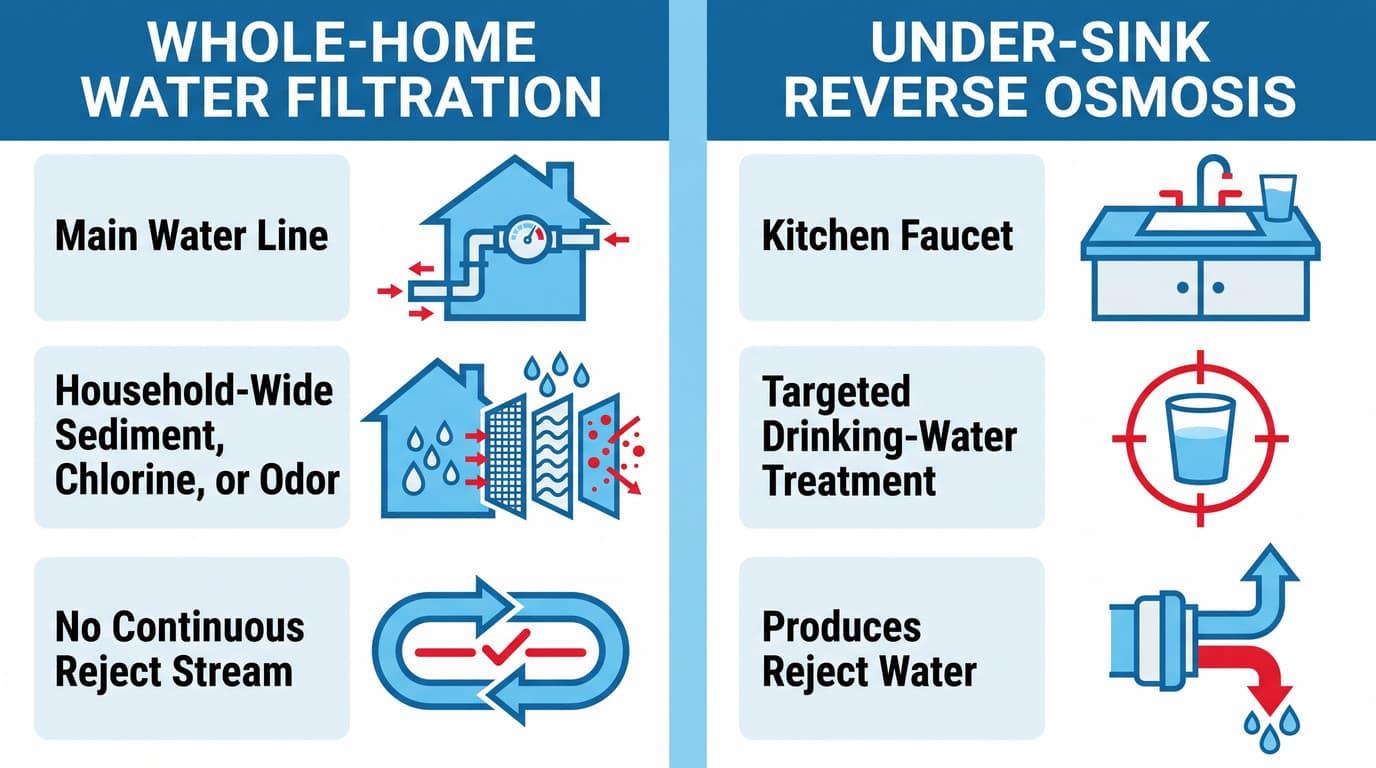
Start with where you notice the problem. If sediment or chlorine odor shows up at several fixtures, whole-home filtration is worth a look. If your concern is the water you drink and cook with, an under-sink reverse osmosis system can treat it right at the kitchen tap.
If you’re dealing with more than one issue, use your water test results to decide which treatments you need. For example, white scale on shower fixtures may call for a water softener, while a drinking-water concern may call for a separate filter.
At Superior Water & Air, we help Salt Lake City homeowners turn those findings into a plan that fits their plumbing, budget, and daily water use. Tell us what you’ve noticed, and we’ll help you decide what to address first and what to expect from the options that fit your home.
Frequently Asked Questions
If you’re preparing for installation or have questions about using a system at home, start with these common questions.
Can a Reverse Osmosis System Connect to My Refrigerator?
Some under-sink RO systems can supply a refrigerator dispenser or ice maker with the right tubing, pressure, and installation setup. Check the RO manufacturer’s specifications and the refrigerator’s water-pressure requirements before connecting them.
Will a Whole-House Filter Lower My Water Pressure?
An undersized filter or a clogged cartridge can restrict flow. Proper sizing, installation, and timely maintenance help protect water pressure when several fixtures run at once.
Can I Install an RO System if I Rent?
Possibly. Some under-sink systems require a dedicated faucet or changes to drain plumbing, so get your landlord’s approval before installing one. Countertop options may be easier where permanent modifications aren’t allowed.
Does Reverse Osmosis Make Water Safe During a Boil-Water Advisory?
Don’t assume it does. Follow your water utility’s or health department’s advisory instructions. A typical household RO system should not replace required boiling or other emergency disinfection steps.
Can I Use a Water Filter With a Private Well?
Yes, but test the well first. Iron, sulfur odors, sediment, bacteria, and dissolved contaminants require different treatment methods, and some conditions need disinfection or pretreatment before filtration or RO.
Recent News
Water Softeners vs Water Purifiers: What You Should Know
November 20, 2026

5 Best Fireplace Companies Salt Lake City for 2027
November 18, 2026
Hard Water in Salt Lake City: How to Fix Water Hardness at Home
November 17, 2026
How Long Do Water Softeners Last? Repair or Replace in Salt Lake City
November 10, 2026

How Often Furnace Maintenance Should You Schedule in Salt Lake City?
November 10, 2026

How Much Does Furnace Repair Cost in Salt Lake City?
November 5, 2026